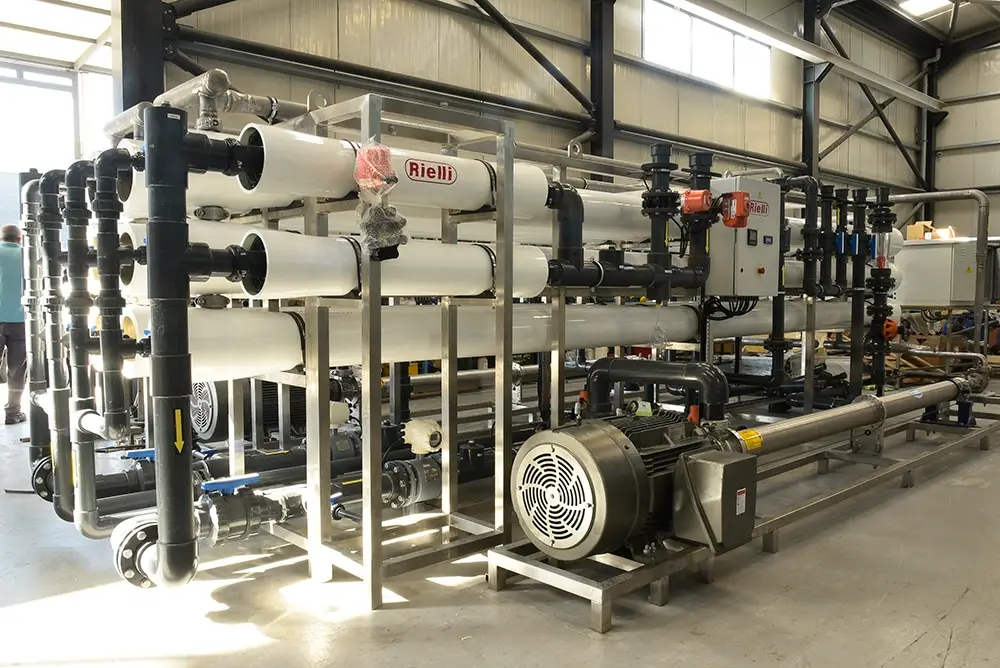
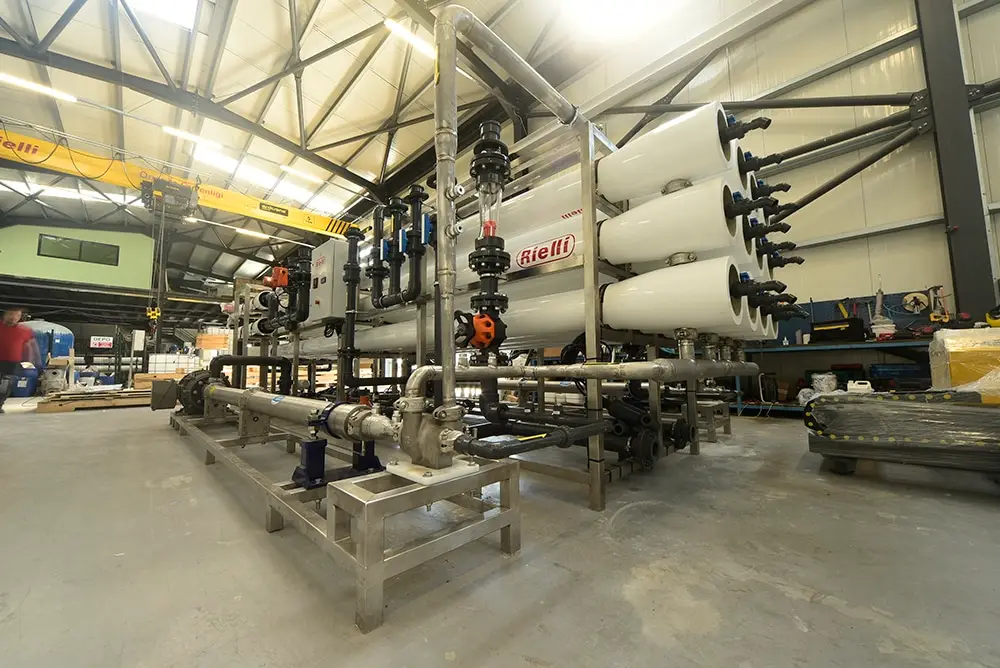
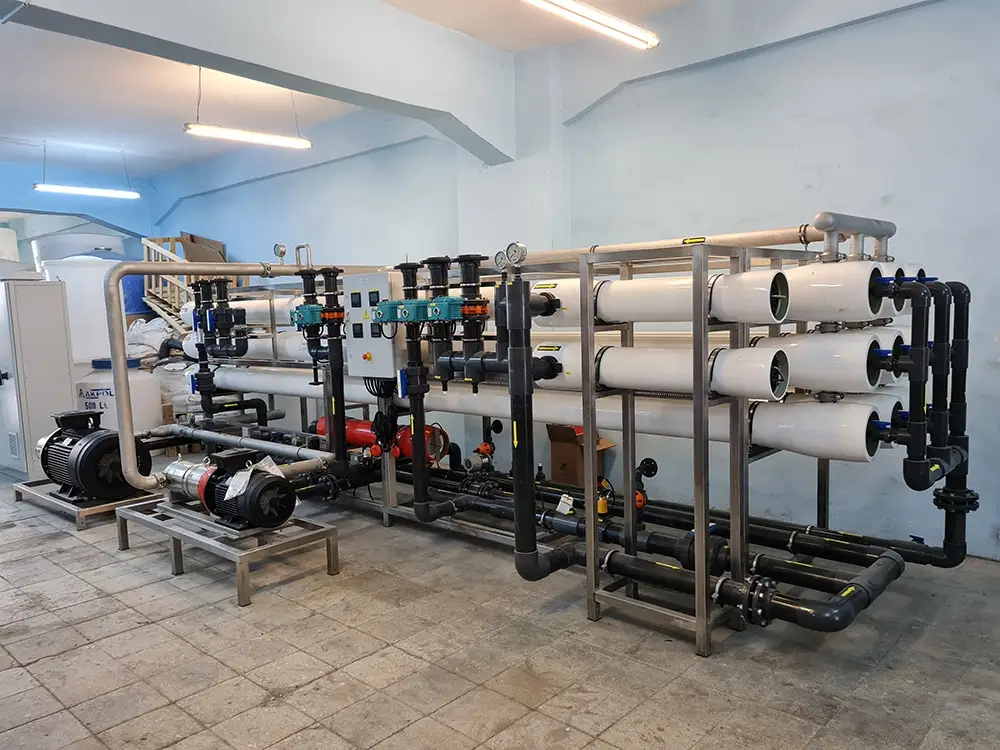
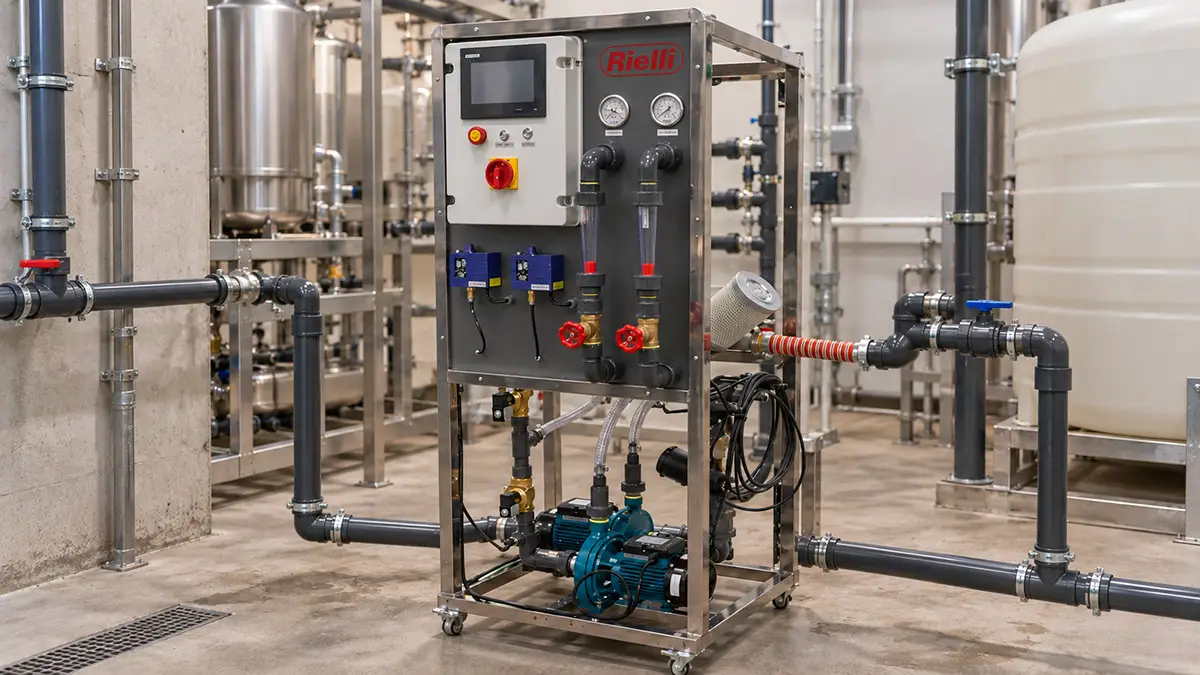
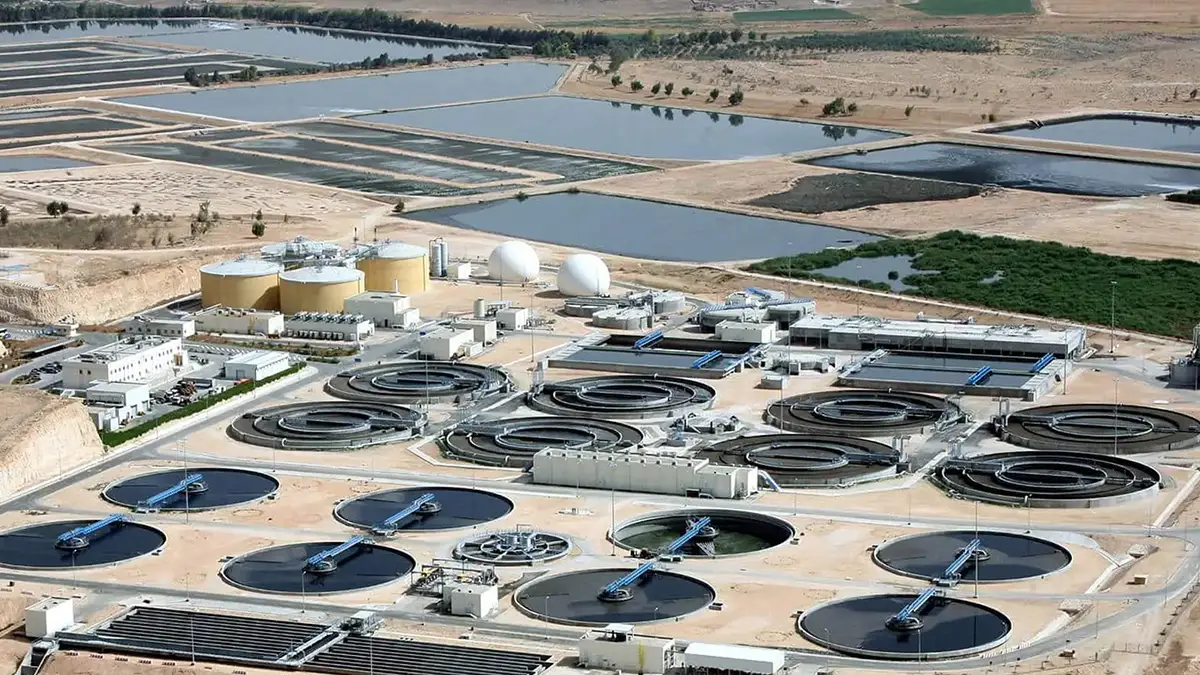
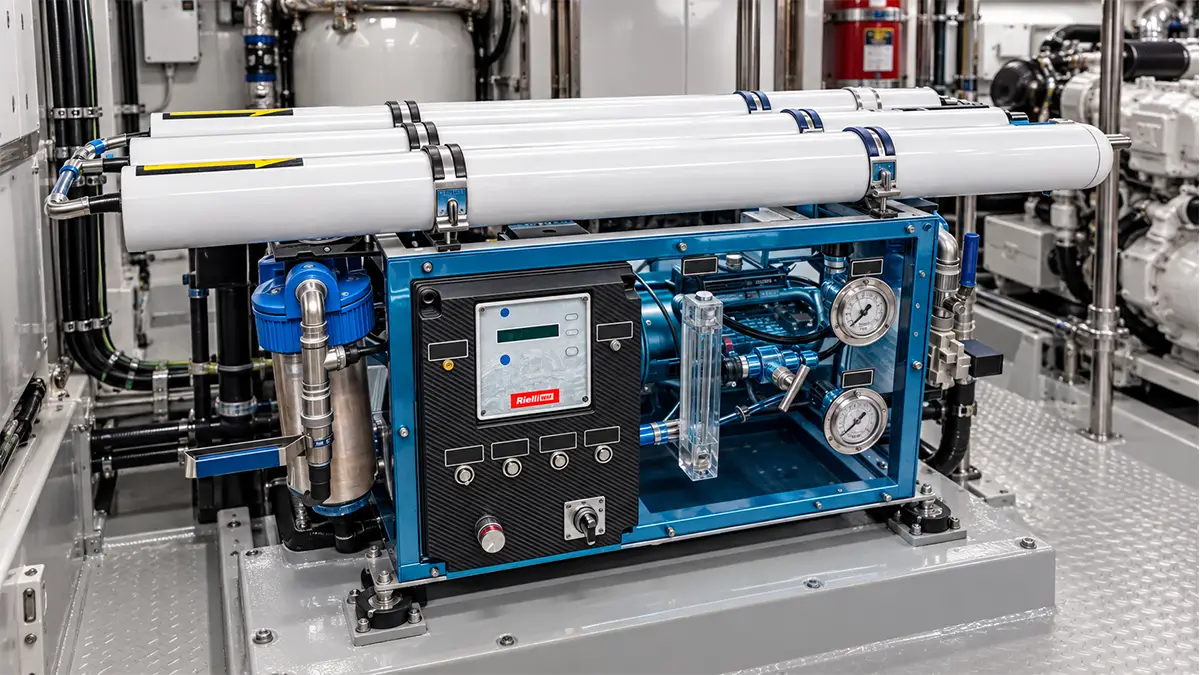
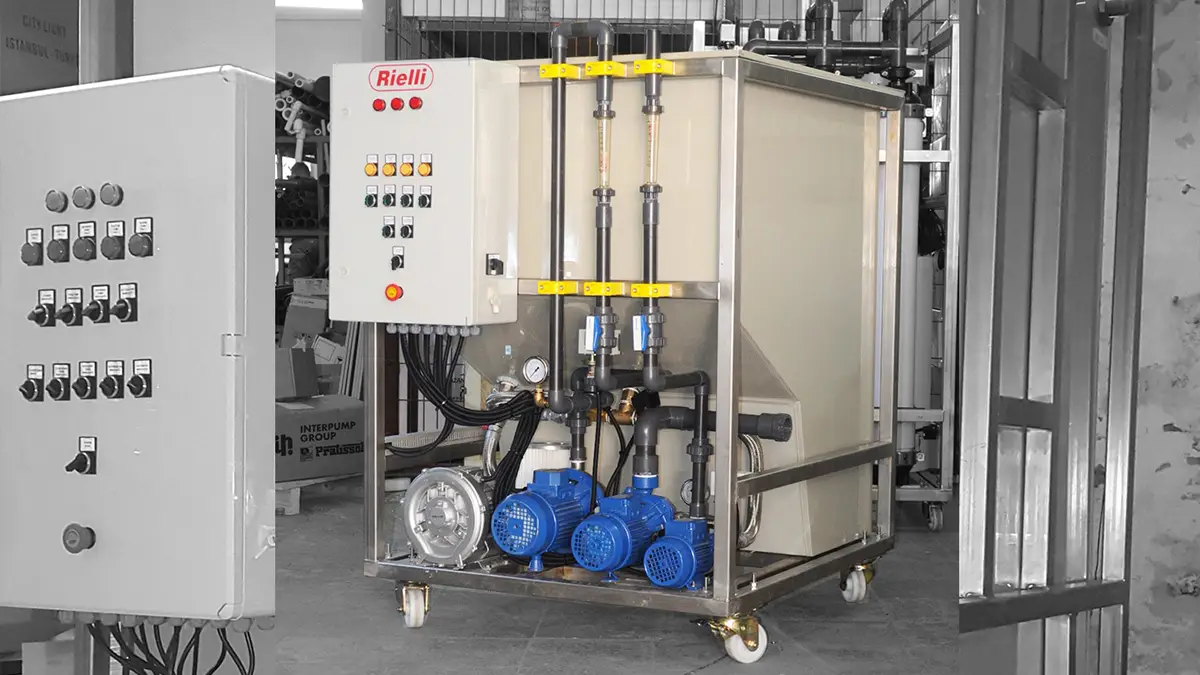
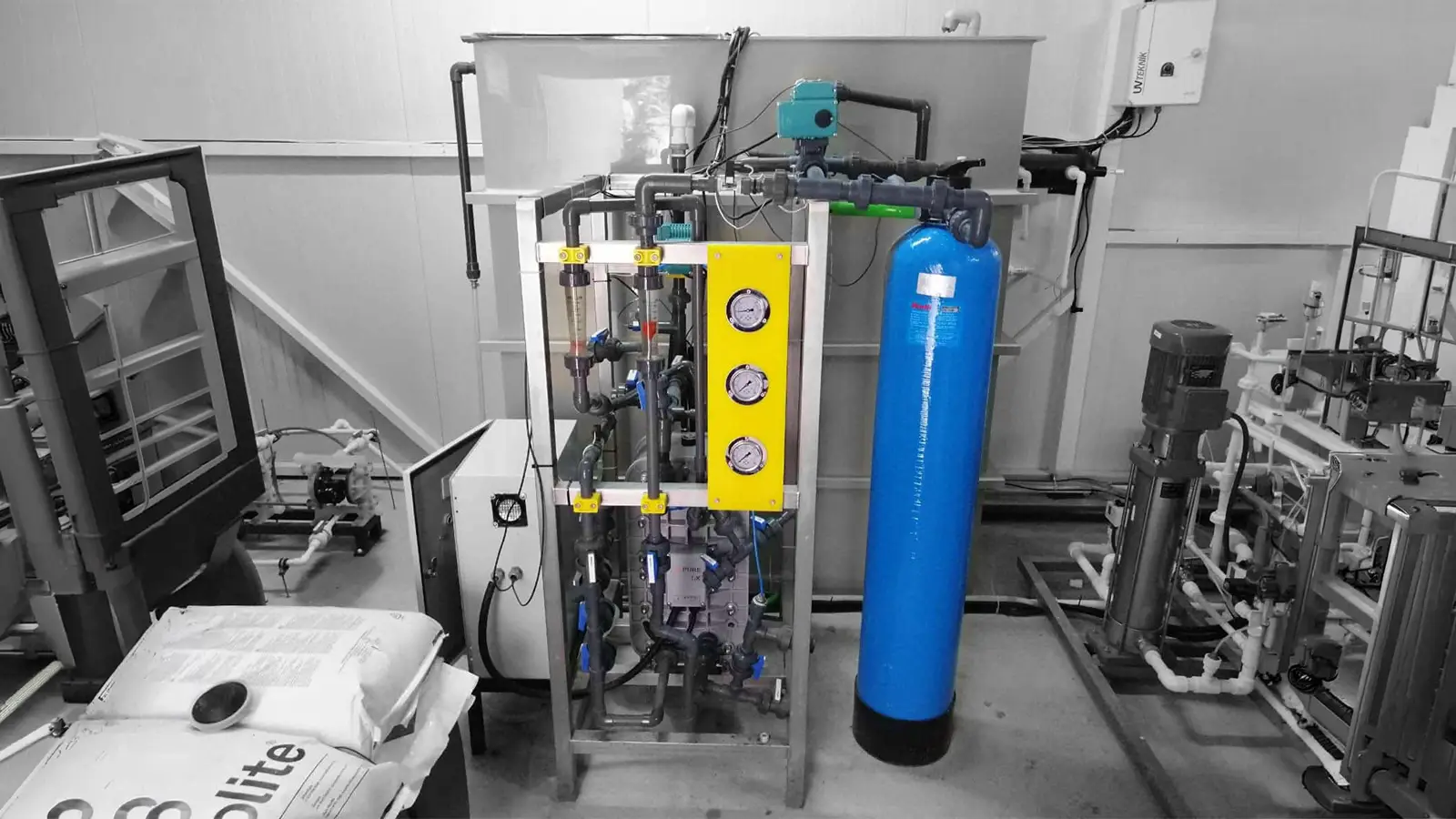
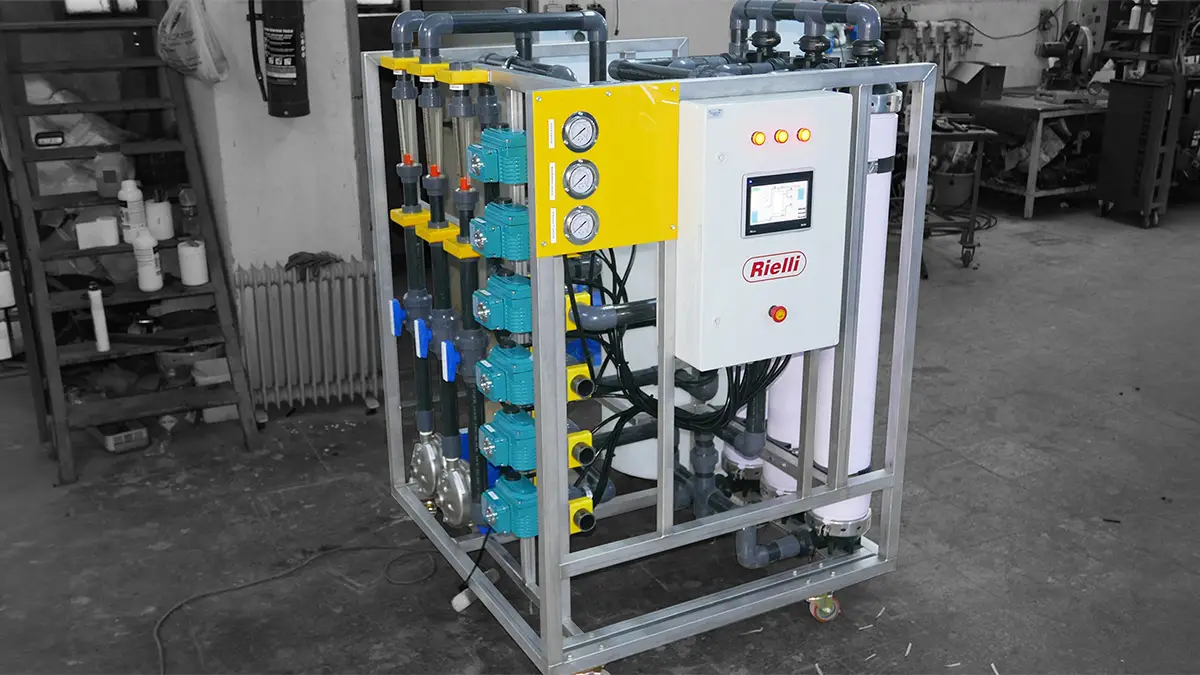
Rielli seawater desalination plants use reverse osmosis technology to reduce dissolved salts and other substances in seawater, providing the treatment infrastructure required for drinking water and industrial process water production. These systems enable the use of seawater as an alternative water source in coastal regions, islands, and facilities where conventional freshwater resources are limited.
Each seawater reverse osmosis (SWRO) system is engineered according to seawater characteristics, daily water demand, and the required treated water quality. From pretreatment and membrane selection to equipment configuration, every stage is evaluated to support efficient and stable operation.
What Is a Seawater Desalination Plant?
A seawater desalination plant is an integrated system of equipment and treatment processes designed to reduce the high salinity of seawater and produce water suitable for its intended application.
Seawater desalination systems based on reverse osmosis technology are commonly referred to as SWRO (Seawater Reverse Osmosis) systems.
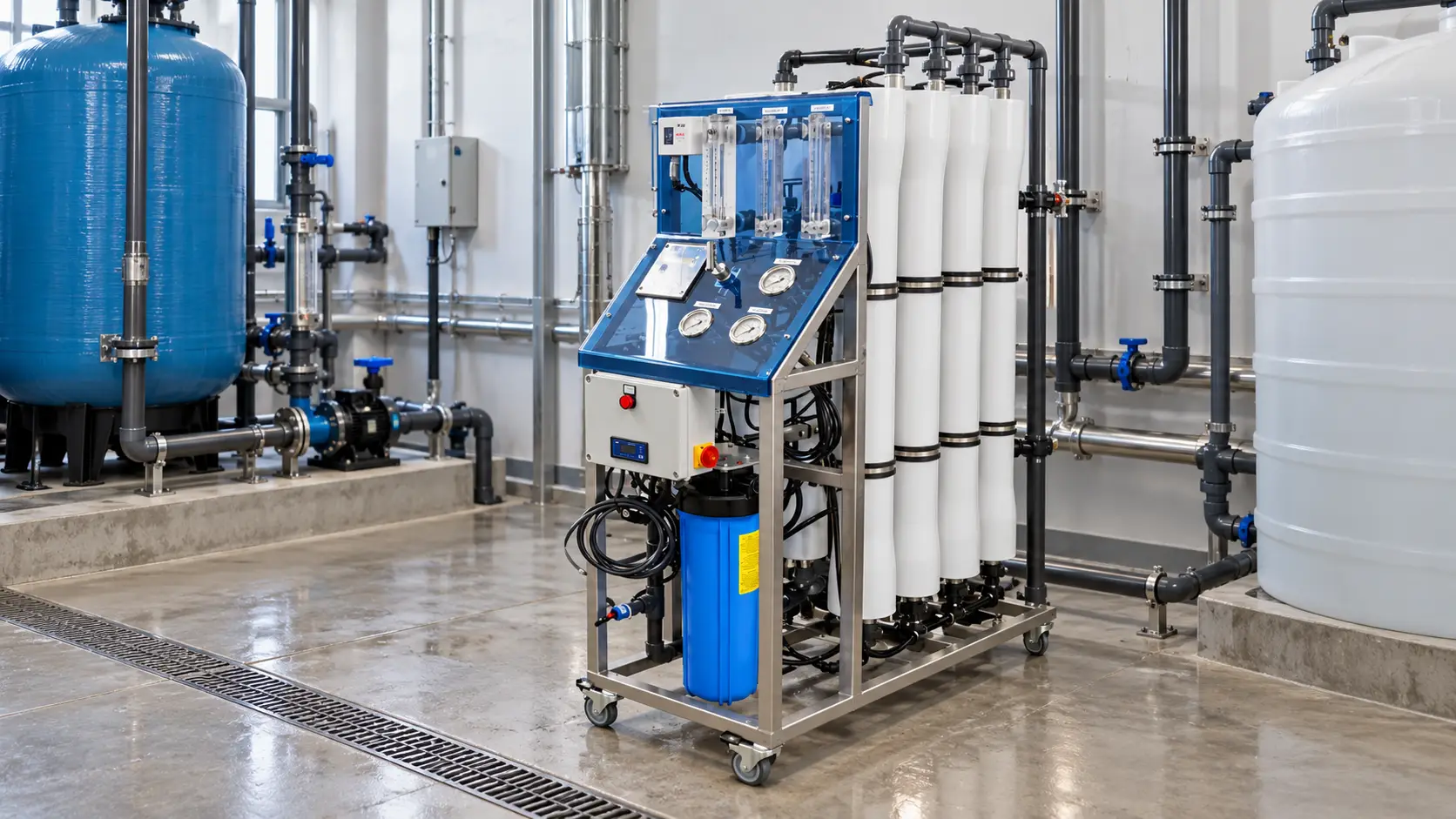
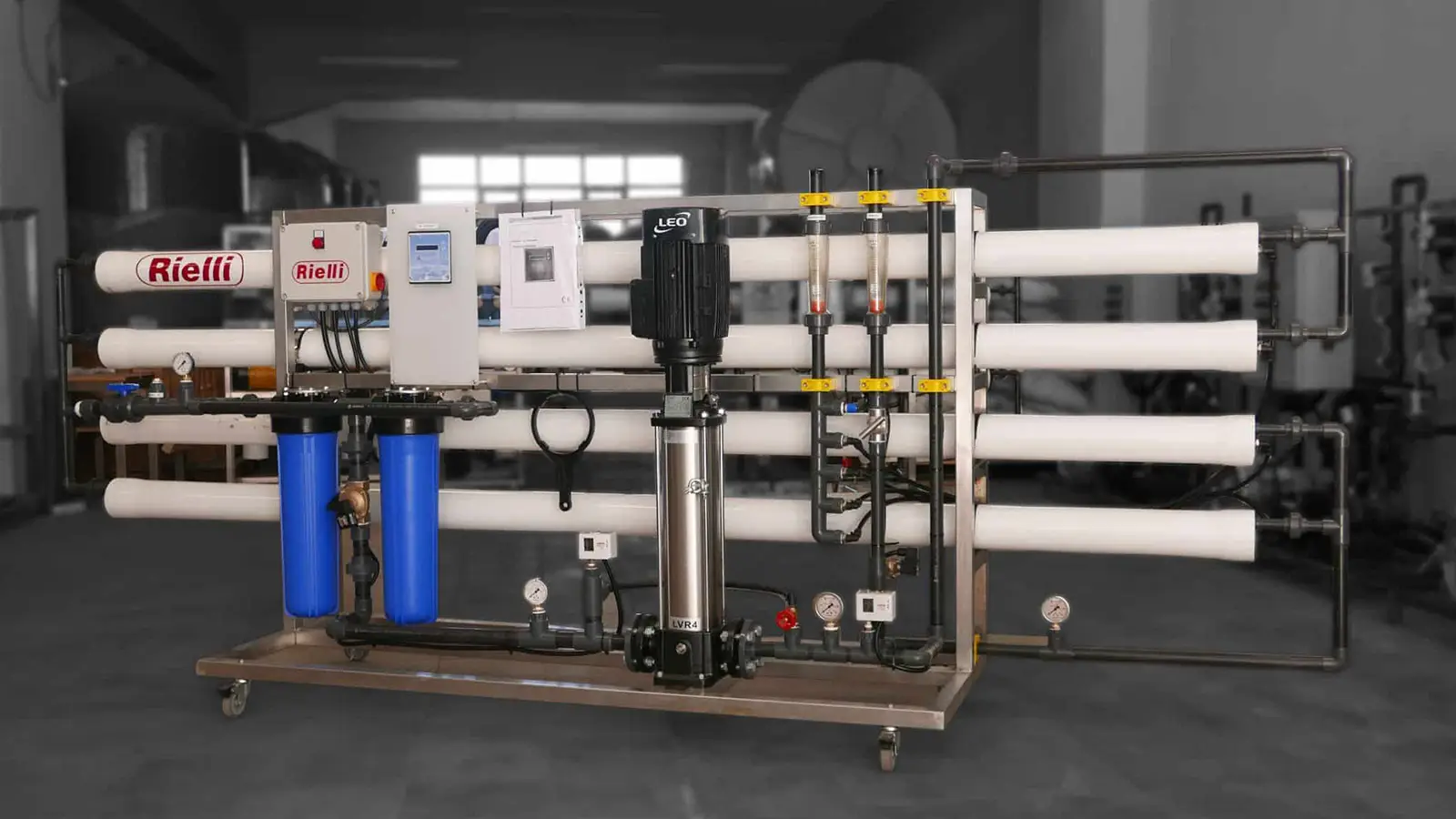
The main components of a seawater reverse osmosis plant typically include pretreatment units, high-pressure pumps, seawater-compatible reverse osmosis membranes, monitoring and control equipment, and application-specific post-treatment systems.
The intended use of the produced water, whether for drinking water supply or industrial applications, determines the additional treatment processes and water quality requirements.
How Do Seawater Desalination Plants Work?
Pretreatment
Before entering the reverse osmosis membranes, seawater undergoes pretreatment designed according to the characteristics of the intake water.
This stage aims to reduce suspended solids and other contaminants that may contribute to membrane fouling and performance deterioration.
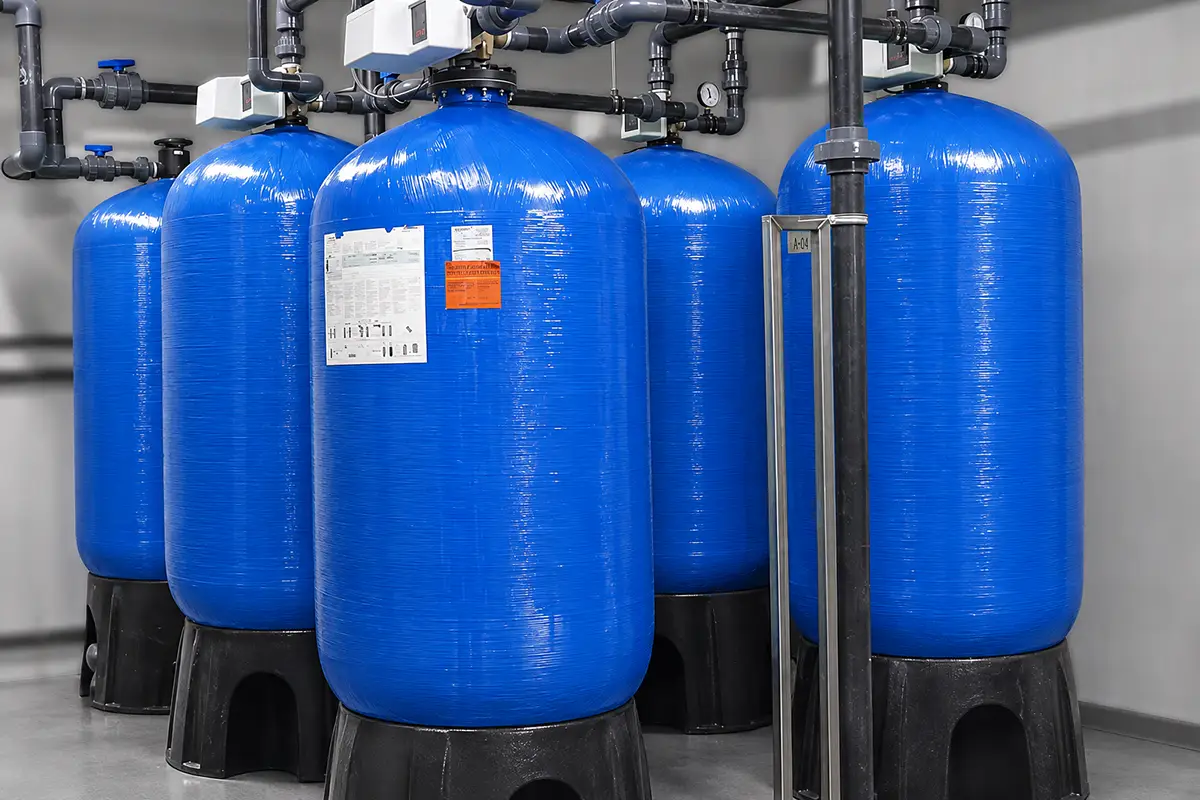
Depending on the intake location and water analysis results, pretreatment may include conventional filtration, ultrafiltration, and appropriate chemical conditioning.
For more information about membrane-based pretreatment technologies, explore our Ultrafiltration (UF) Units and Modules page.
High-Pressure Reverse Osmosis
Following pretreatment, seawater is fed into reverse osmosis membranes under high pressure.
A portion of the feedwater passes through the membranes and becomes low-salinity product water, commonly referred to as permeate.
The remaining stream, containing a higher concentration of dissolved salts, is separated from the system as concentrate or brine.
Operating pressure and water recovery rate are determined according to seawater salinity, temperature, membrane characteristics, and project-specific design conditions.
Post-Treatment and Water Conditioning
Water produced by the reverse osmosis process may undergo additional treatment to meet the quality requirements of its intended application.
For drinking water production, post-treatment stages may include remineralization, pH adjustment, and disinfection.
For industrial process water applications, the required conductivity and other water quality parameters are determined according to the specifications of the facility.
Learn more about potable water applications through our Drinking Water Production from Seawater solutions page.
The importance of managing water safety from source water treatment through storage and distribution is also addressed in the World Health Organization’s Guidance on Safe Drinking-Water Production through Desalination.
Why Is Pretreatment Important in Seawater Desalination?
Seawater quality can vary depending on the intake location, seasonal conditions, and surrounding activities.
In ports, shipyards, and enclosed coastal bays, increased concentrations of oil, organic matter, and suspended solids may contribute to faster fouling of reverse osmosis membranes.
Appropriate pretreatment helps protect membrane elements, manage cleaning requirements, and maintain consistent freshwater production performance.
Therefore, the design of a seawater desalination system should consider not only salinity but also other water quality parameters that may influence membrane operation.
Evaluating these factors during the initial engineering stage helps determine an appropriate pretreatment configuration for the specific seawater source.
Energy Efficiency and Operating Performance
Energy consumption is one of the major operating cost components of seawater reverse osmosis desalination.
Rielli engineers use membrane manufacturers’ design software to evaluate membrane configurations, pump selection, and operating conditions together.
Depending on project capacity and operating requirements, energy recovery devices (ERDs) may also be considered.
These devices recover a portion of the hydraulic energy contained in the high-pressure concentrate stream and transfer it back into the desalination process, helping reduce overall energy requirements.
In addition to appropriate equipment selection, efficient long-term operation depends on regular maintenance, membrane cleaning, and continuous monitoring of water quality and system performance.
Where Are Seawater Desalination Plants Used?
Seawater desalination plants can be considered for facilities with access to seawater and a need for alternative freshwater resources.
Typical applications include:
- Hotels, resorts, and tourism facilities.
- Islands and coastal communities.
- Industrial manufacturing facilities.
- Shipyards and coastal industrial operations.
- Power plants and energy facilities.
For each application, freshwater production capacity and treated water quality must be determined according to the facility’s specific consumption requirements.
How to Select the Right Seawater Desalination System
Selecting an appropriate SWRO desalination plant requires an evaluation of feedwater characteristics and operating conditions in addition to daily freshwater production capacity.
The following information should be considered during the design stage:
- Daily and hourly freshwater production requirements.
- Seawater salinity, temperature, and available water analysis results.
- Seawater intake configuration and pretreatment requirements.
- Required product water quality specifications.
- Available installation space, electrical infrastructure, and maintenance access.
- Concentrate management and applicable discharge requirements.
Evaluating these parameters together helps establish a treatment system that balances production requirements, initial investment, and long-term operating costs.
Request a Quote for Your Seawater Desalination Project
Rielli provides project-specific engineering for seawater desalination plants, including treatment process selection, membrane system design, and equipment sizing according to the facility’s requirements.
Share your daily freshwater demand, intended water application, and available seawater analysis results to evaluate the appropriate desalination solution for your project.
Request a Quote for a Seawater Desalination Plant →