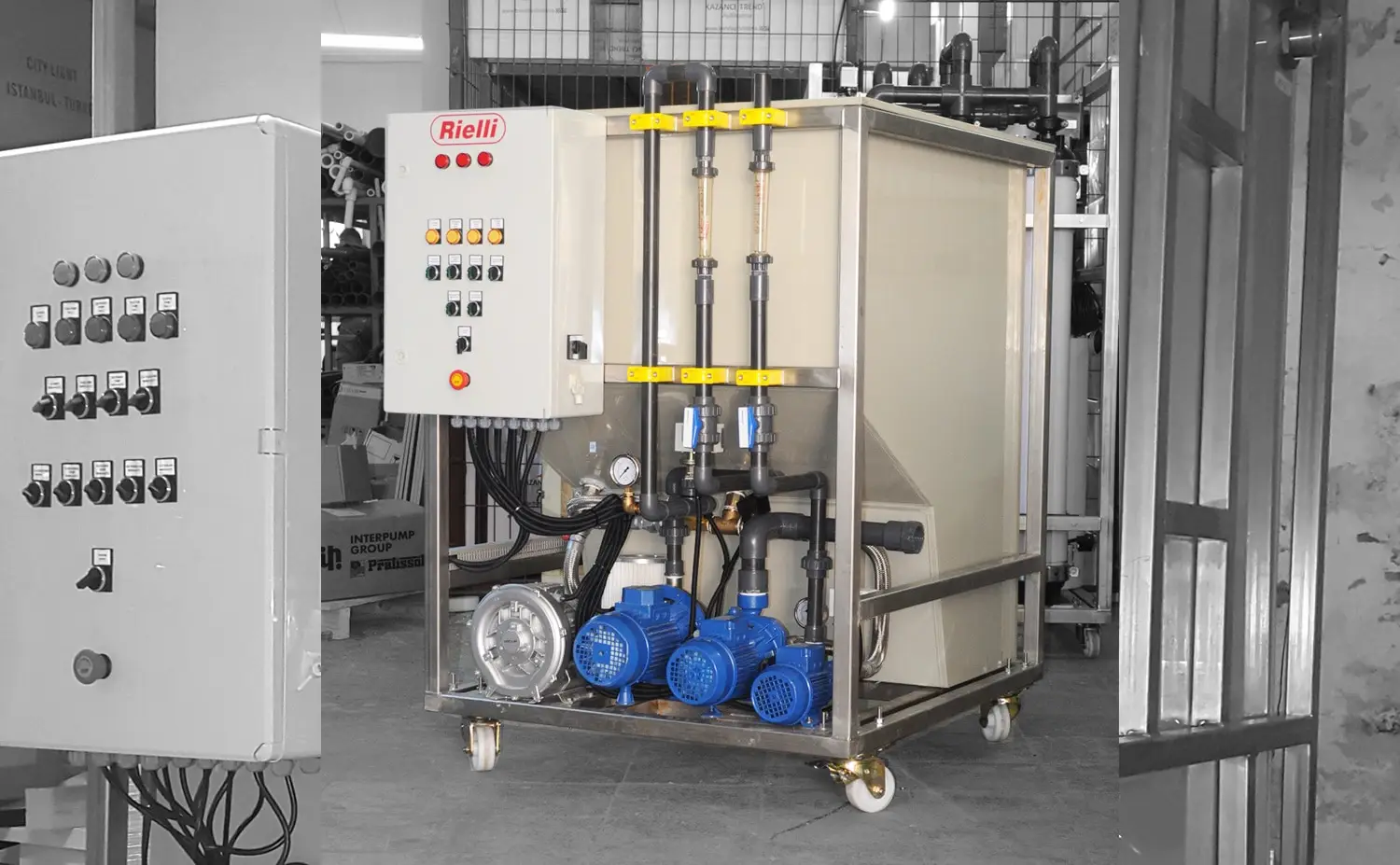
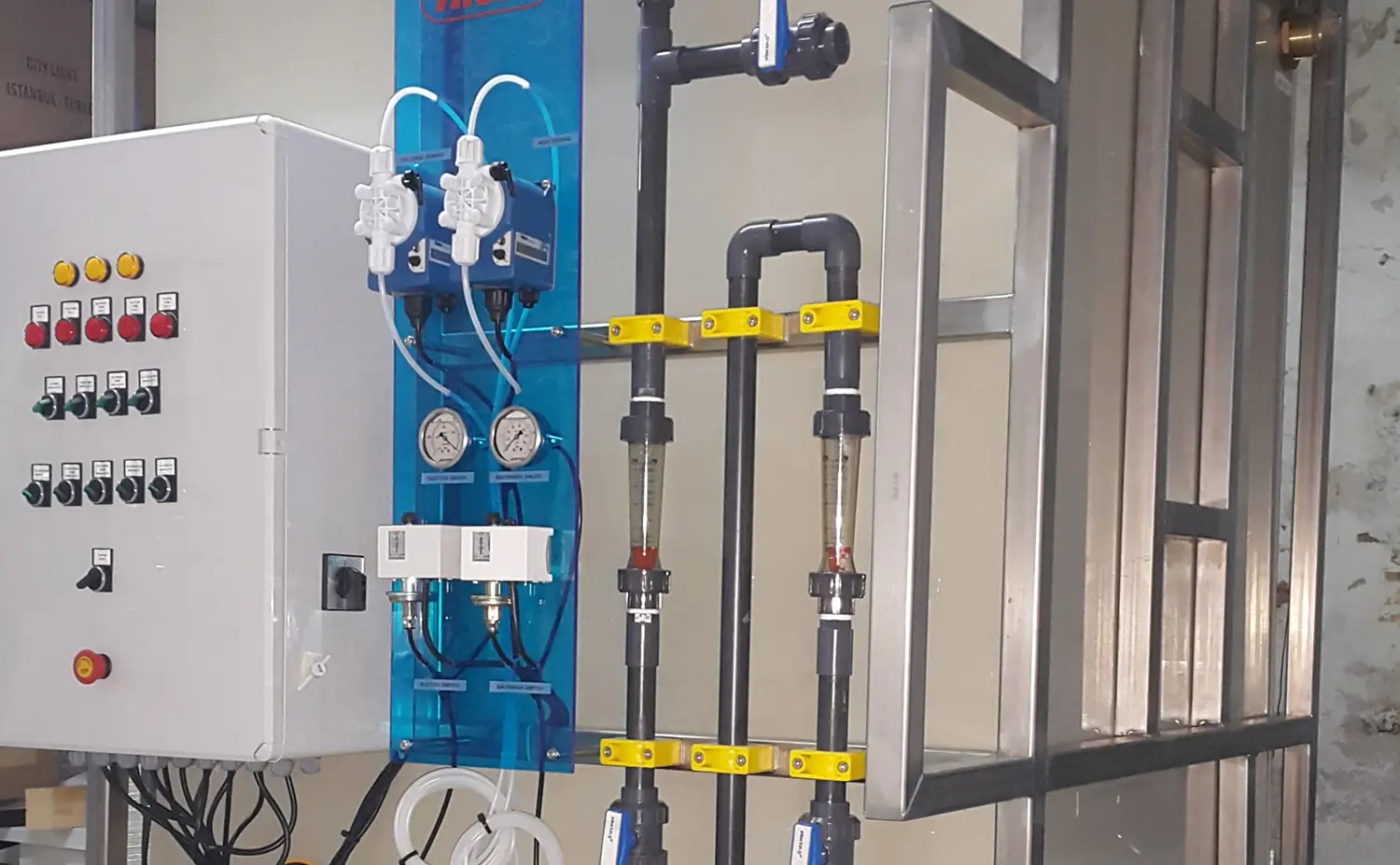
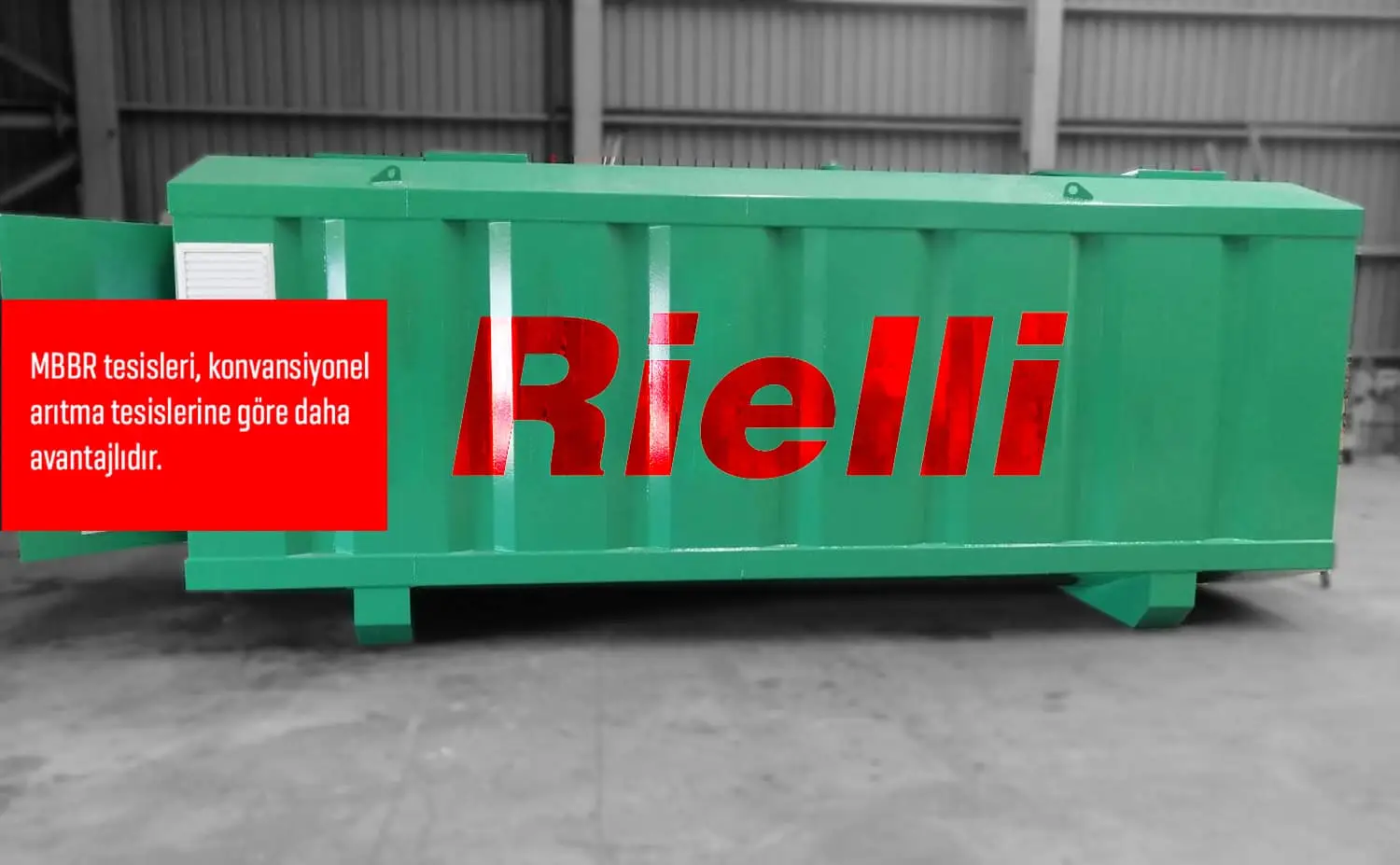
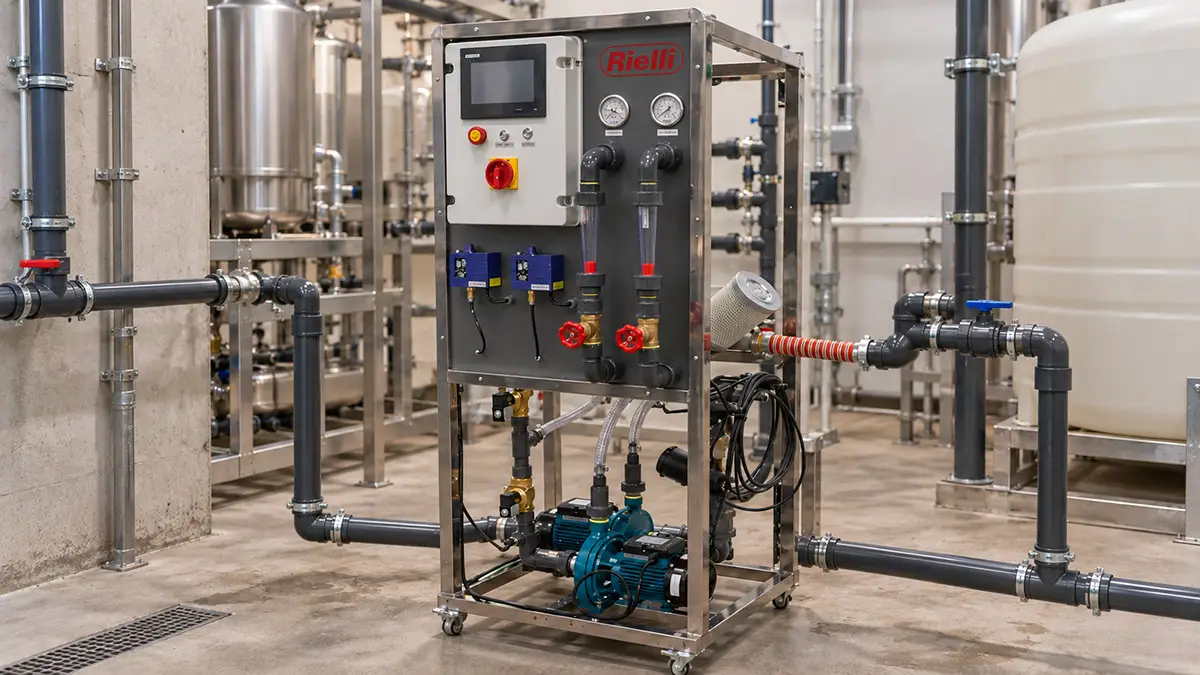
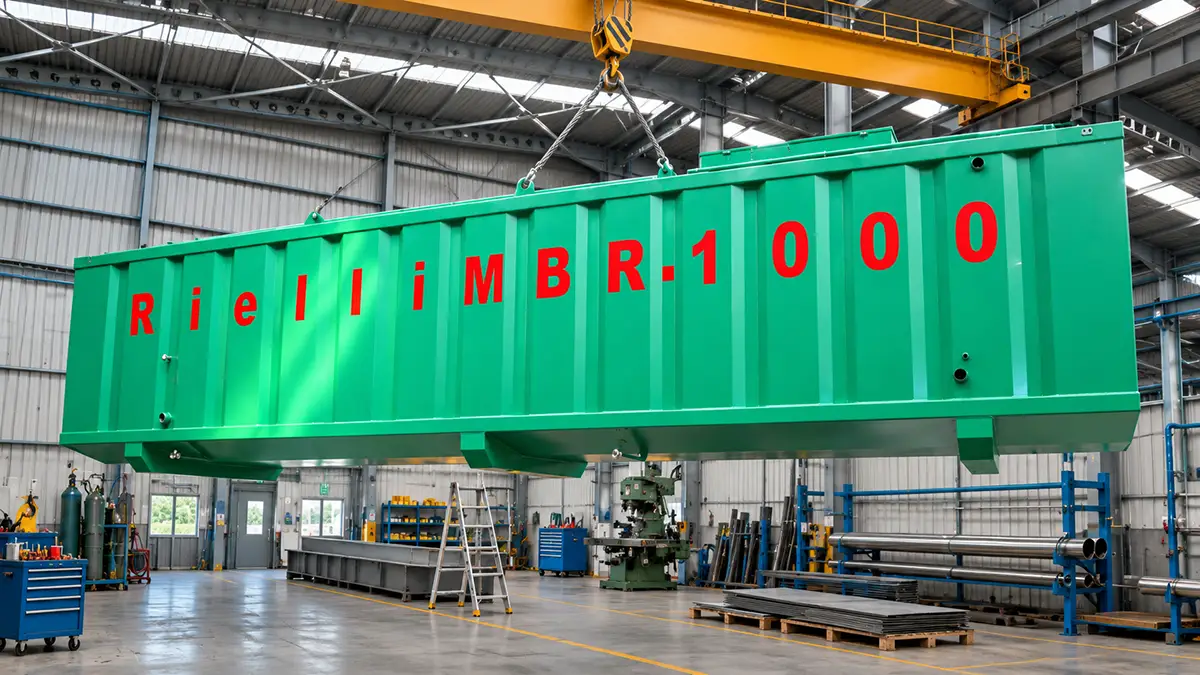
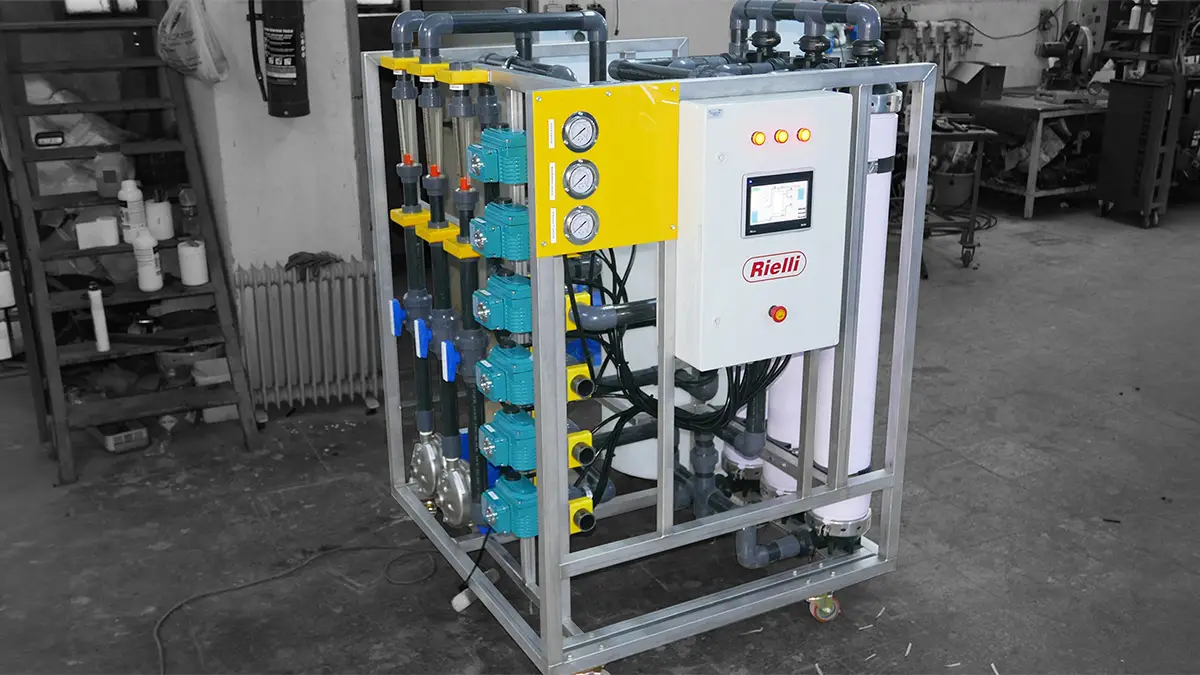
Rielli Moving Bed Biofilm Reactor (MBBR) systems use biofilm carrier media to provide biological treatment of domestic wastewater and industrial wastewater with suitable characteristics.
MBBR technology can be considered for compact wastewater treatment plant designs and for increasing the biological treatment capacity of existing facilities.
What Is a Moving Bed Biofilm Reactor (MBBR)?
MBBR stands for Moving Bed Biofilm Reactor, a biological wastewater treatment technology that uses microorganisms growing on the surfaces of freely moving carrier media inside a reactor.
These microorganisms form a biofilm that helps remove biodegradable organic contaminants from wastewater.
The carrier media provide attachment surfaces for microbial growth, helping retain biological biomass within the treatment reactor.
In addition to organic matter removal, appropriately designed MBBR processes can support nitrification and denitrification, depending on the treatment objectives and reactor configuration.
How Does an MBBR Wastewater Treatment System Work?
Pretreatment
Wastewater first undergoes appropriate pretreatment to remove coarse solids and other materials that could interfere with biological treatment.
Depending on wastewater characteristics, additional processes such as flow equalization, oil and grease removal, or other pretreatment stages may be necessary.
Biological Treatment Using Moving Biofilm Carriers
Microorganisms develop biofilms on the surfaces of moving carrier media within the reactor.
In aerobic MBBR reactors, aeration supplies oxygen for biological treatment while also helping keep the carrier media in motion.
In anoxic treatment stages, mechanical mixing equipment may be used to maintain carrier movement without introducing oxygen through aeration.
The biological process configuration is determined according to the required removal of organic pollutants and, where applicable, nitrogen compounds.
Carrier Retention and Solid-Liquid Separation
Retention screens installed at the reactor outlet prevent the biofilm carrier media from leaving the treatment system.
As portions of the biofilm naturally detach from the carriers, appropriate downstream treatment stages are required to separate these solids from the treated water.
Depending on the project, sedimentation or other solid-liquid separation processes may be incorporated.
For more information about biological nutrient removal and wastewater treatment design, explore the U.S. Environmental Protection Agency’s Nutrient Control Design Manual.
Key Features of Rielli MBBR Systems
High-Surface-Area Biofilm Carrier Media
Rielli MBBR designs use specialized biochip carrier media with a stated active surface area of 5,500 m²/m³.
The high available surface area supports microbial attachment and biofilm development, contributing to compact biological reactor configurations.
However, the required reactor volume must be determined through project-specific wastewater loading assessments and biological process calculations.
Capacity Upgrades for Existing Wastewater Treatment Plants
MBBR technology can be evaluated as an option for increasing biological treatment capacity in existing wastewater treatment facilities.
Where the existing infrastructure is suitable, additional biofilm carriers and necessary equipment modifications may support increased treatment capacity.
The need for additional tank volume depends on existing reactor dimensions, biological loading, aeration capacity, and overall process conditions.
Operation- and Cost-Oriented Engineering
Rielli evaluates capital investment and operating expenses together through a project-specific engineering approach.
Carrier media selection, equipment procurement, and production planning are determined according to the technical and operational requirements of each wastewater treatment project.
What Is the Difference Between MBBR and MBR Technology?
MBBR (Moving Bed Biofilm Reactor) and MBR (Membrane Bioreactor) are different biological wastewater treatment technologies.
MBBR systems use moving biofilm carrier media to provide attachment surfaces for microorganisms, while MBR systems incorporate membrane filtration to separate treated water from biological sludge.
In MBR systems, membrane filtration helps produce treated effluent with low suspended solids concentrations.
In MBBR systems, final effluent quality depends on the biological treatment process and the downstream solid-liquid separation and polishing stages.
The appropriate technology should be selected according to required effluent quality, available installation space, wastewater characteristics, and operating conditions.
For further information about membrane-based biological treatment, explore our Membrane Bioreactor (MBR) Plants and Modules page.
Can MBBR-Treated Wastewater Be Recycled?
MBBR technology can be incorporated as the biological treatment stage of a wastewater recycling system.
However, biologically treated effluent may not directly meet the water quality requirements of every reuse application.
Depending on the intended use, additional processes such as solid-liquid separation, filtration, disinfection, or reverse osmosis may be required.
Learn more about potential reuse applications through Rielli’s Wastewater Recycling and Process Water Production Solutions page.
Request a Quote for an MBBR Wastewater Treatment System
Explore suitable MBBR wastewater treatment solutions with Rielli for new plant installations or capacity upgrades to existing treatment facilities.
To support the initial technical evaluation, you can provide the following information:
- Daily and hourly wastewater flow rates.
- Recent wastewater analysis results and target effluent quality.
- Dimensions and process information for existing treatment tanks.
- Specifications of existing aeration and solid-liquid separation equipment.
- Available installation space and planned treatment capacity increase.
These details help Rielli’s engineering team evaluate suitable reactor configurations, biofilm carrier requirements, and integration options for your project.
Request a Quote for an MBBR Moving Bed Biofilm Reactor System →