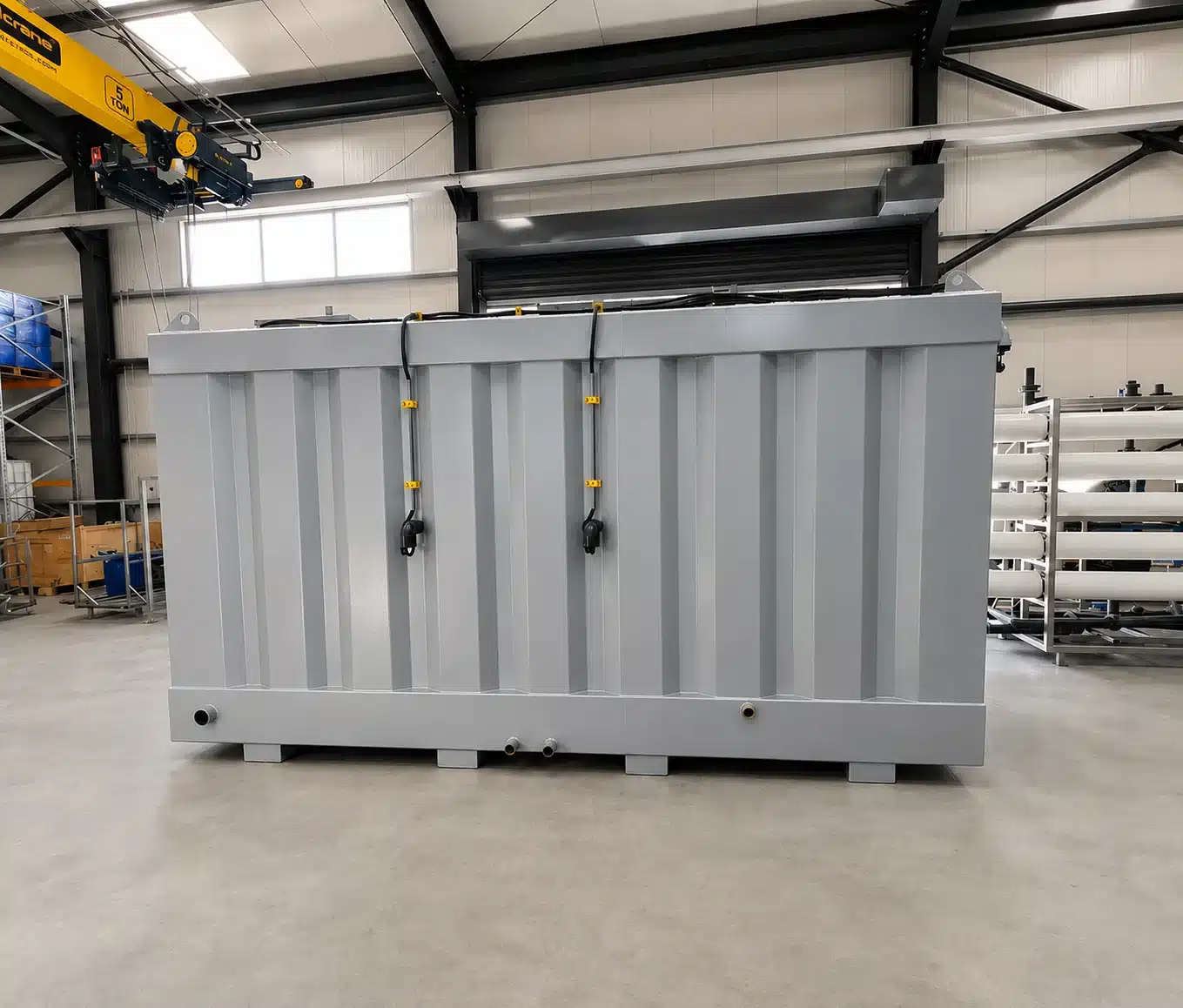
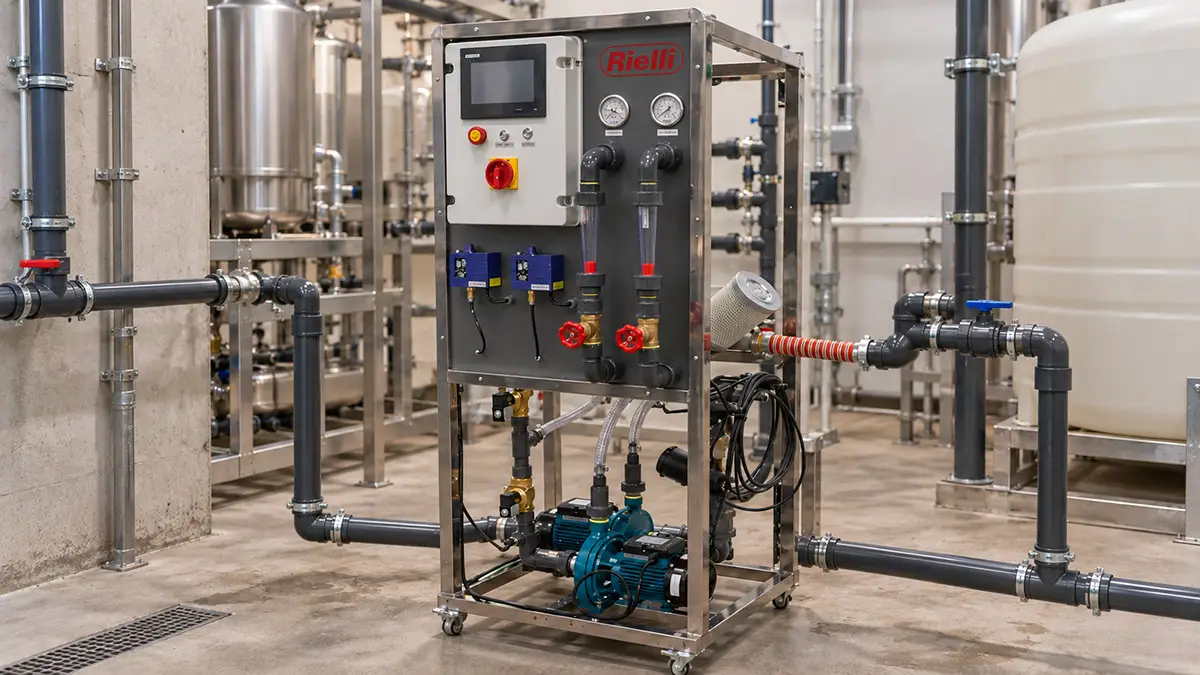
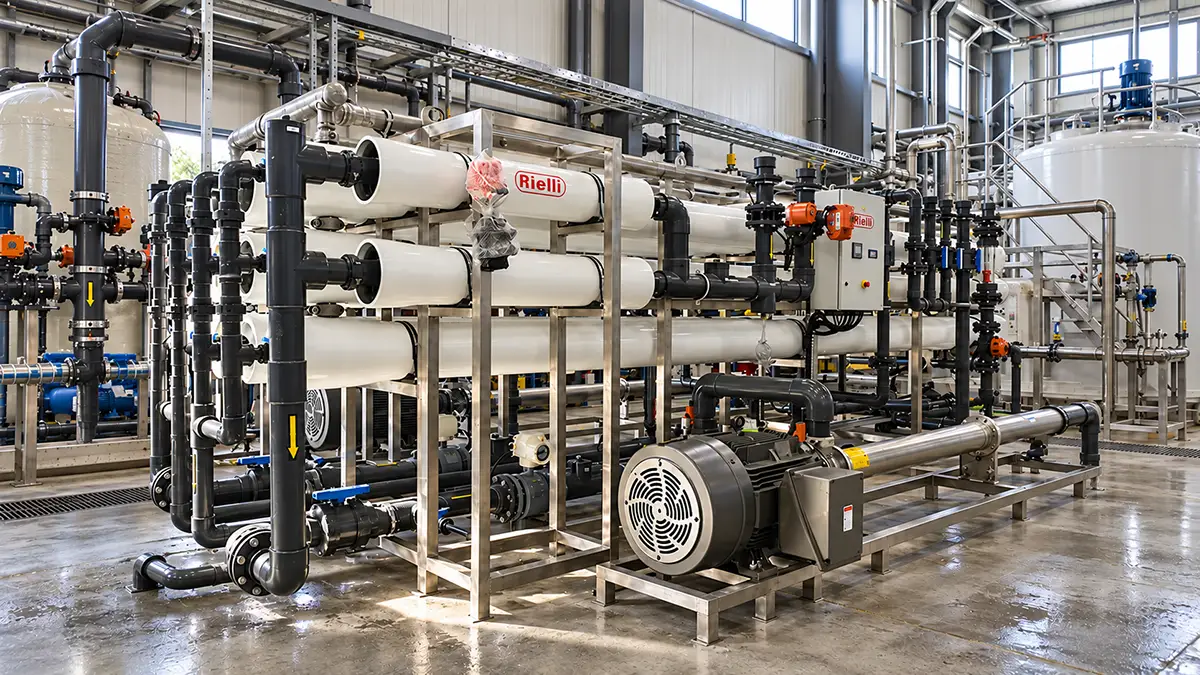
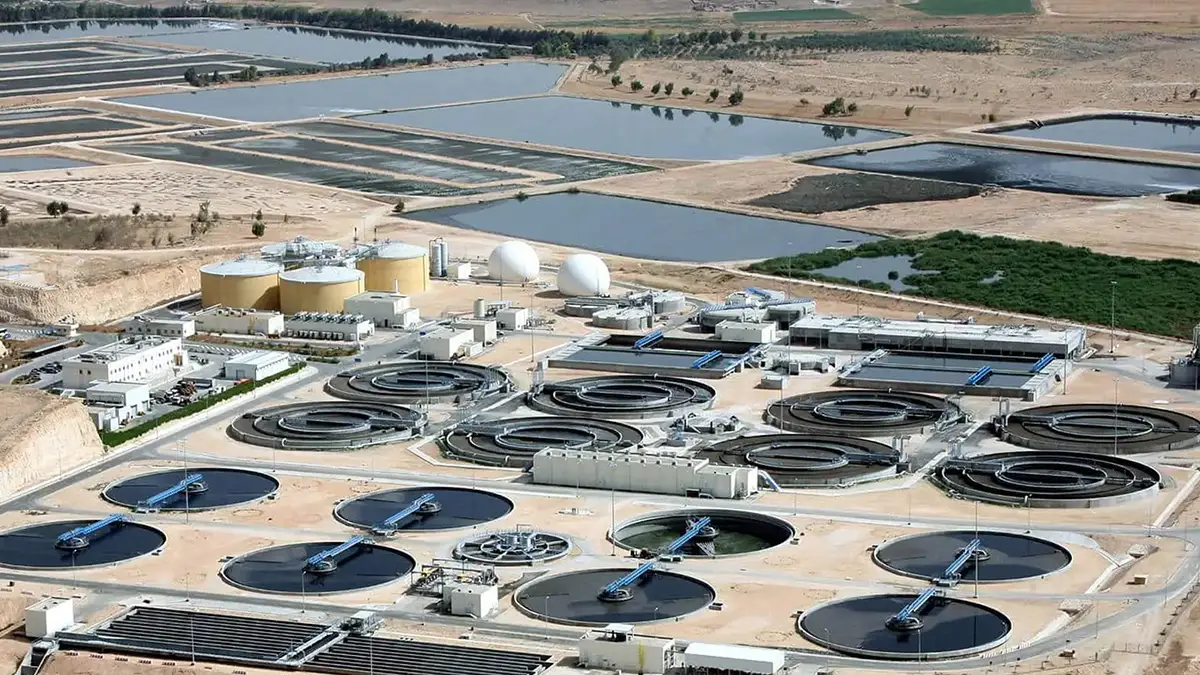
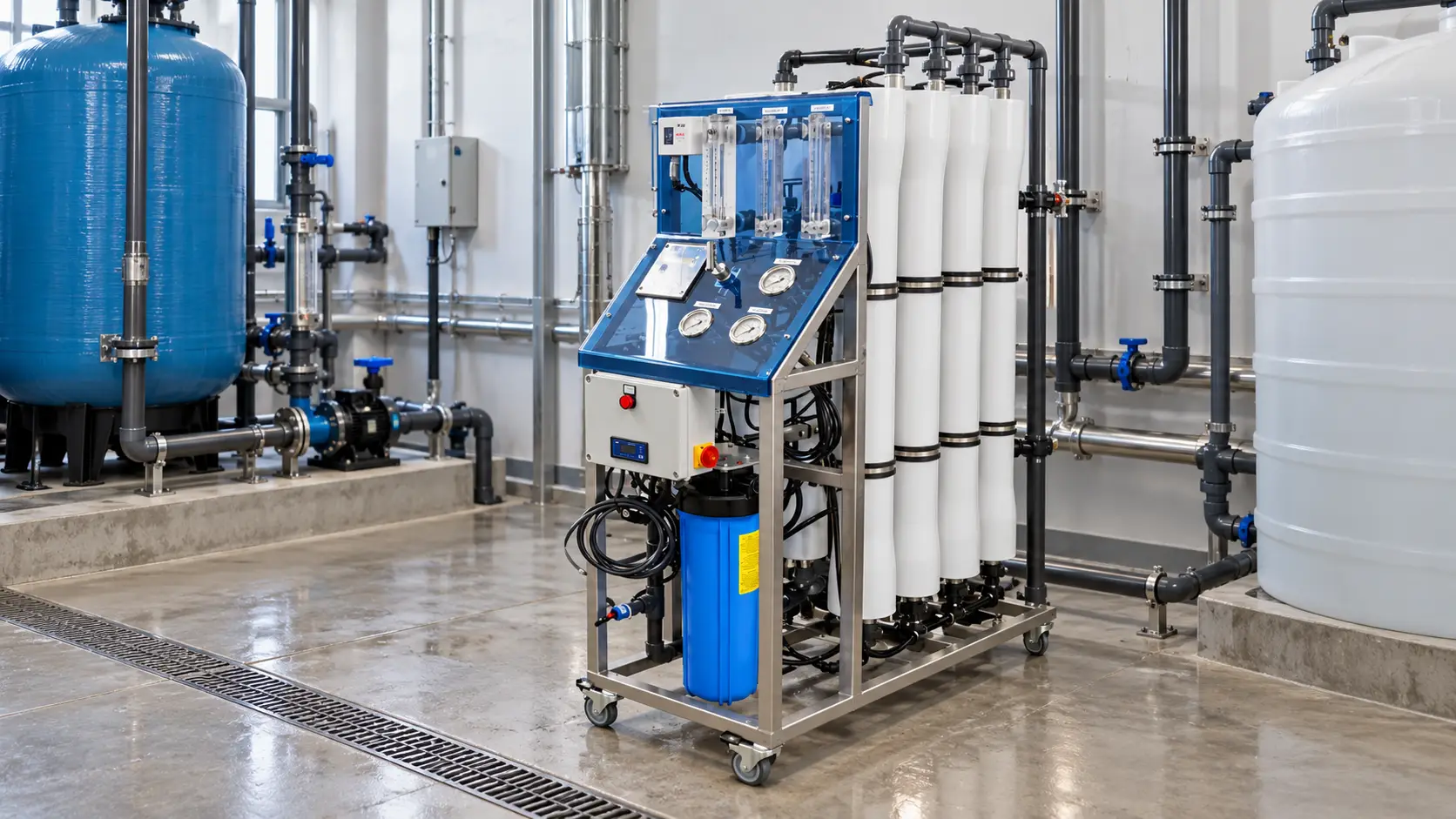
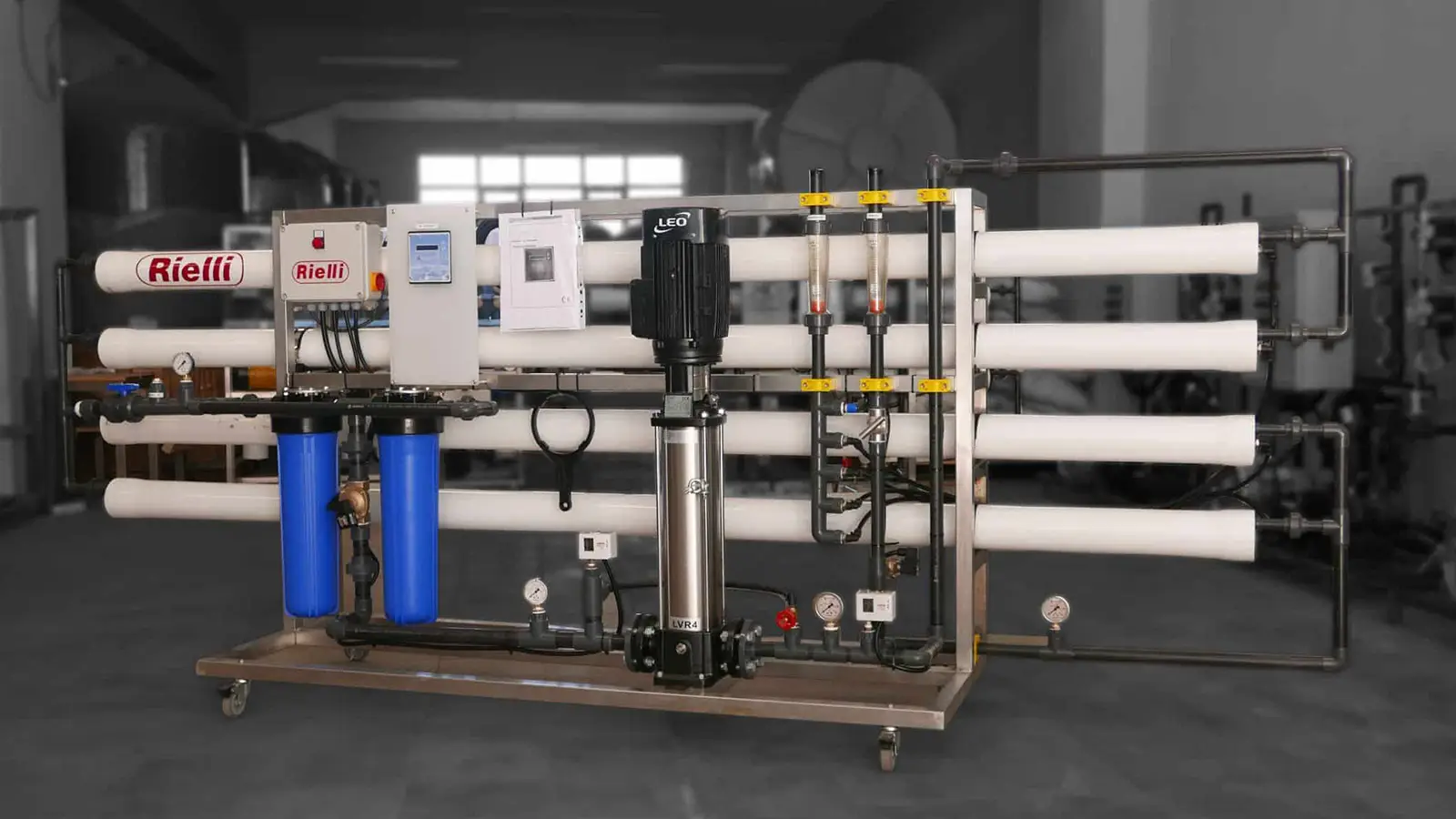
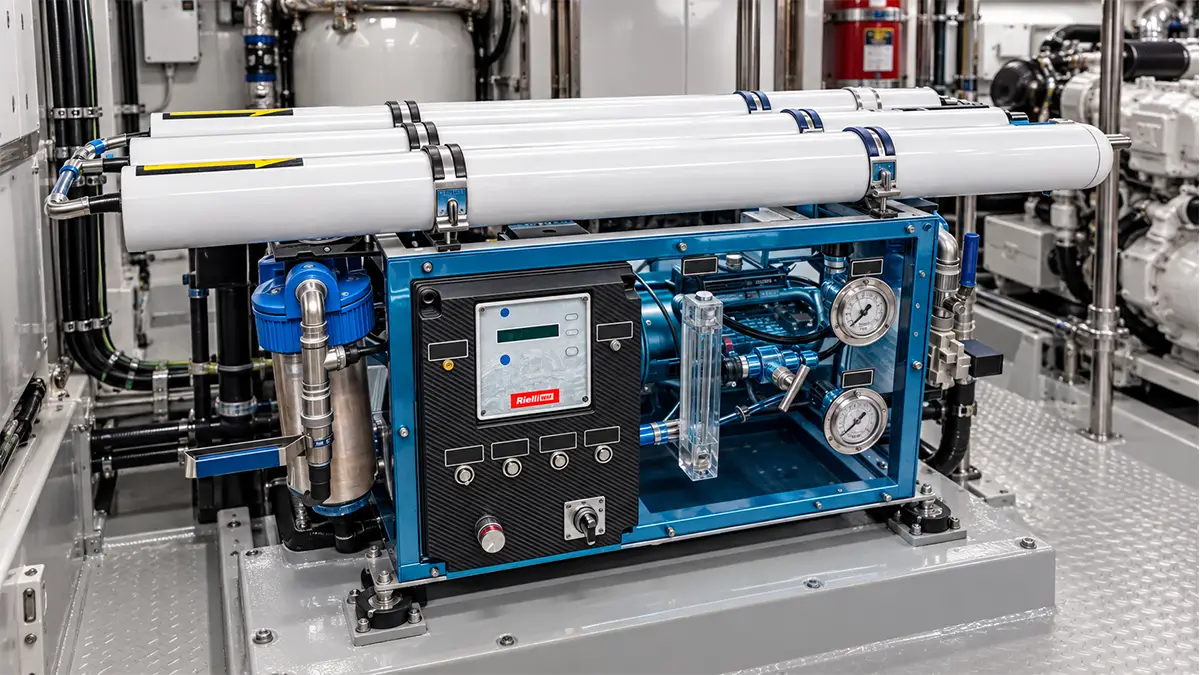
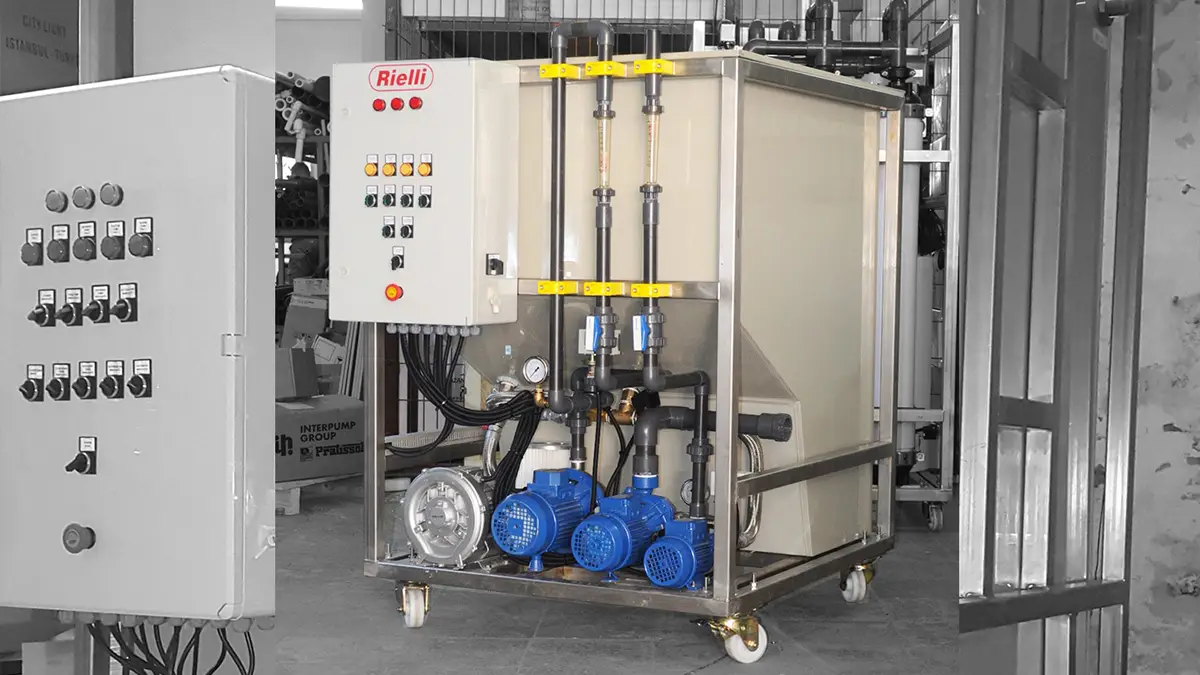
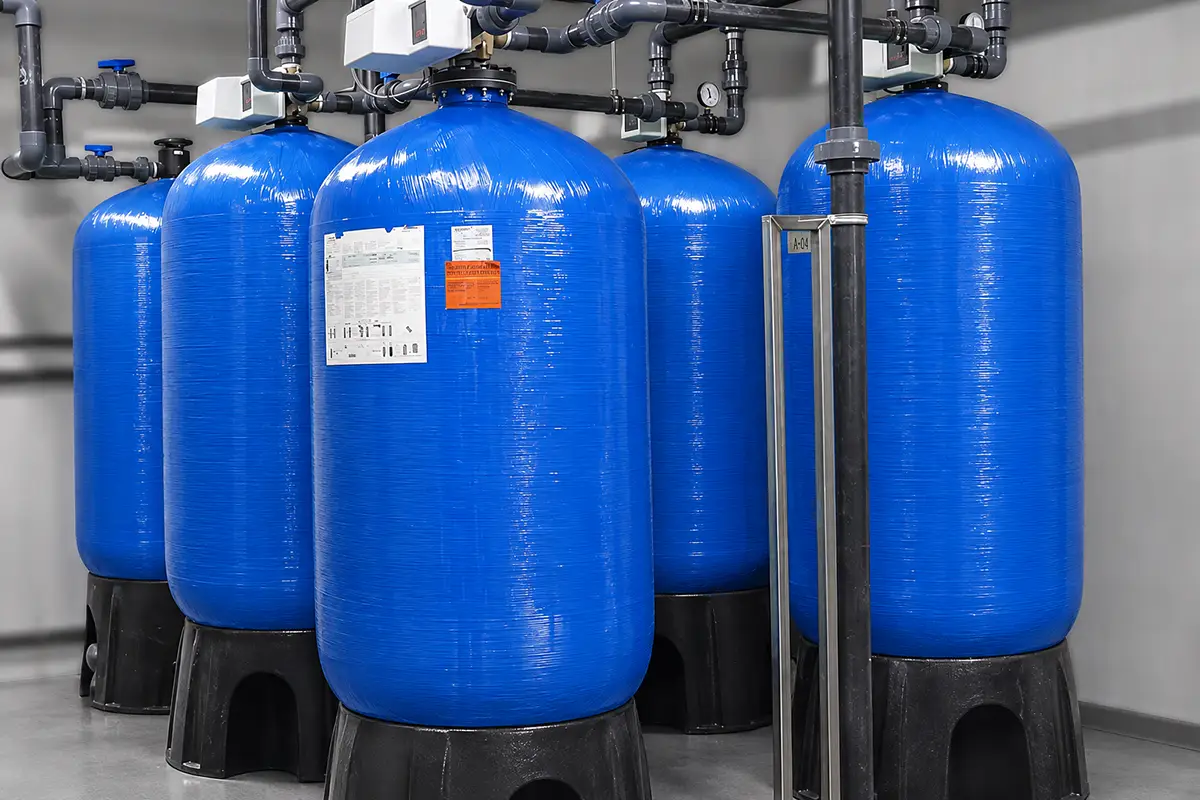
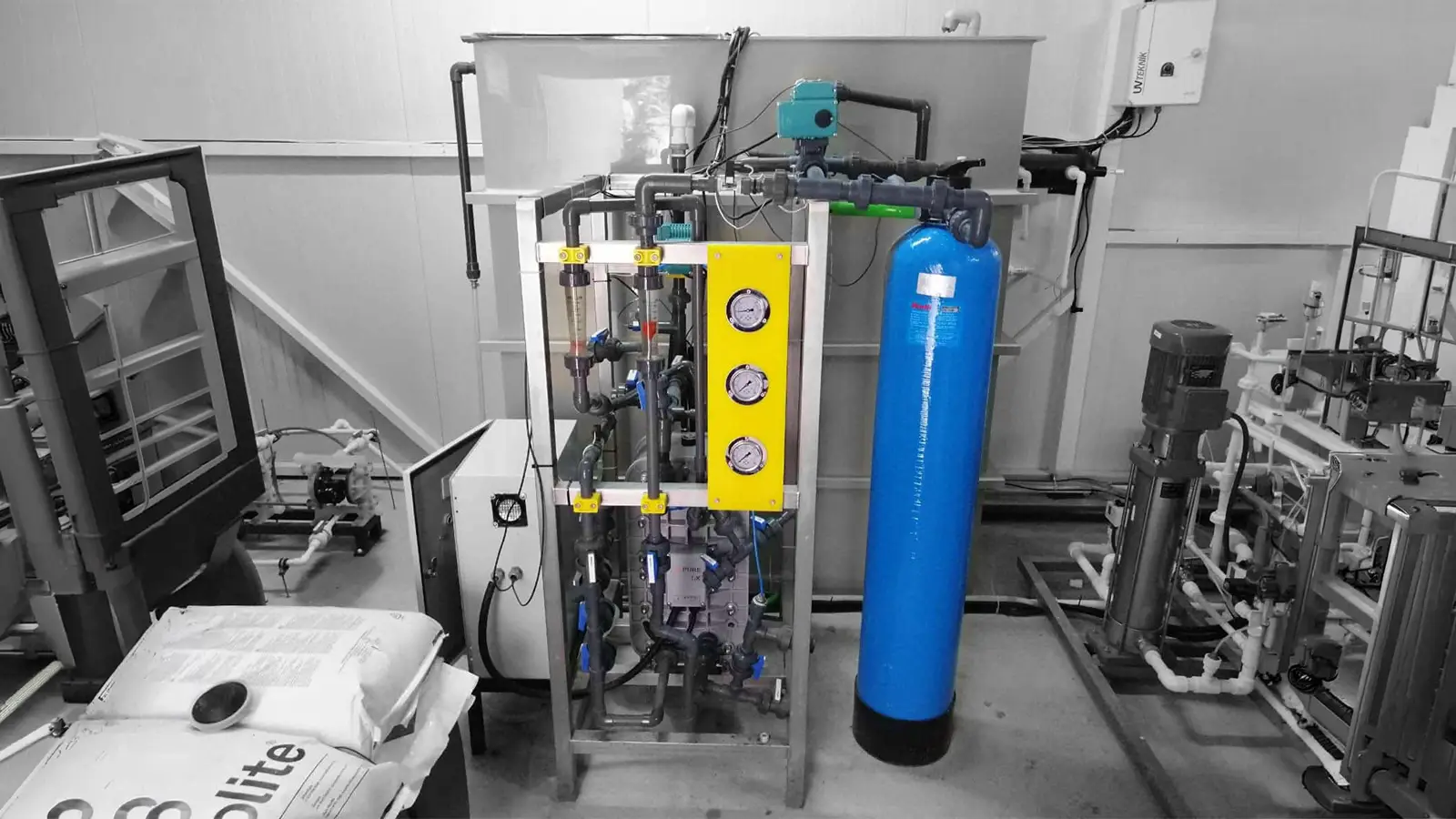
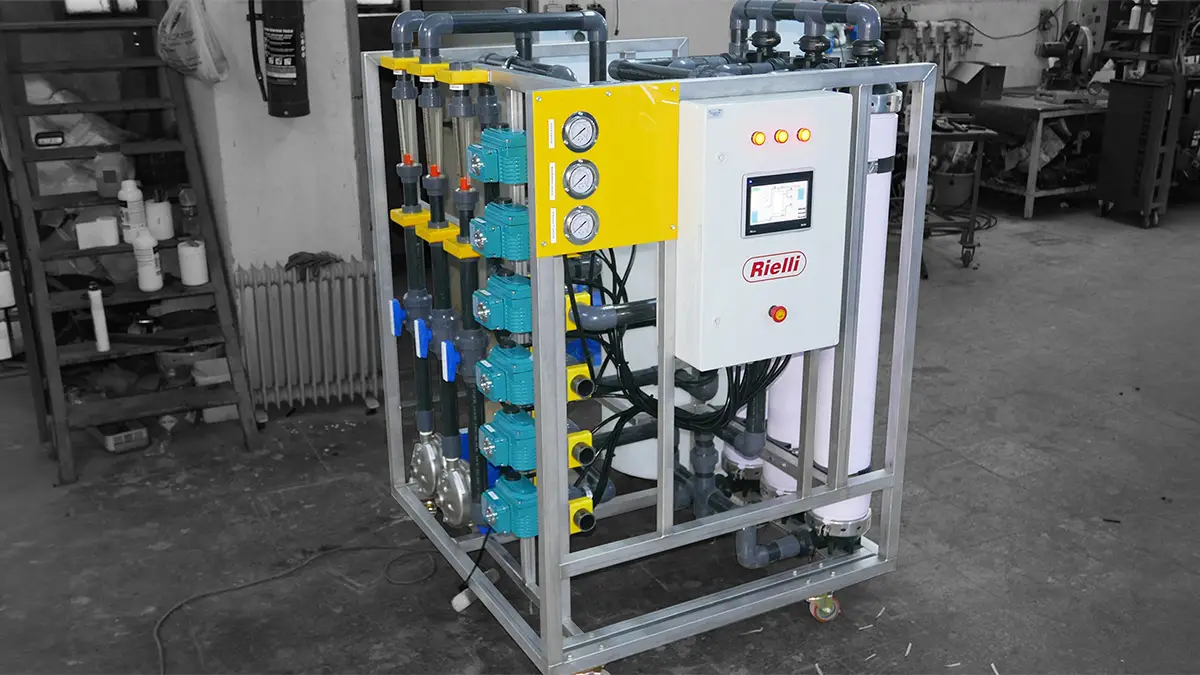
Rielli membrane bioreactor (MBR) plants combine biological wastewater treatment with submerged ultrafiltration membranes. Designed to support compact installation and high-quality treated effluent, these systems are engineered for wastewater treatment and water recycling applications.
MBR technology can be evaluated for both new wastewater treatment facilities and upgrades to existing treatment plants. Each system is designed according to the required treatment capacity, wastewater characteristics, and target effluent quality.
What Is a Membrane Bioreactor (MBR)?
A membrane bioreactor (MBR) is a wastewater treatment technology that integrates biological treatment and membrane filtration within a single treatment process.
During biological treatment, microorganisms break down biodegradable organic contaminants, while membranes separate the treated water from biological sludge.
In conventional activated sludge systems, final clarification is typically achieved through sedimentation. In an MBR system, membrane filtration replaces this final settling stage.
This configuration produces treated effluent with low suspended solids concentrations and can enable a more compact treatment plant layout when supported by appropriate system design.
For further technical information about MBR technology, explore the U.S. Environmental Protection Agency’s Membrane Bioreactors for Wastewater Management Fact Sheet.
How Do MBR Wastewater Treatment Plants Work?
Pretreatment
Wastewater undergoes appropriate pretreatment to remove coarse solids, fibrous materials, and other contaminants that could damage or obstruct the membranes.
Depending on influent wastewater characteristics, equalization and additional pretreatment processes may also be incorporated.
Biological Treatment
Wastewater enters a biological reactor where microorganisms break down biodegradable organic pollutants.
Aeration and other operating conditions are adjusted according to the required treatment performance.
Where nitrogen or phosphorus removal is required, the biological process configuration must also be designed to address these additional treatment objectives.
Membrane Filtration
Submerged membranes retain biological sludge within the treatment system while allowing treated water to be withdrawn.
Appropriate operating conditions, routine membrane maintenance, and cleaning procedures are essential for maintaining consistent filtration performance.
What Is the Difference Between an MBR Plant and an MBR Membrane Module?
An MBR wastewater treatment plant is an integrated system combining biological treatment, membrane filtration, aeration equipment, pumps, and process monitoring and control systems.
An MBR membrane module, on the other hand, is the filtration component responsible for separating treated water from biological sludge.
Selecting an appropriate membrane module requires evaluating membrane surface area, operating flux, wastewater characteristics, and the hydraulic conditions of the treatment plant.
When replacing membrane modules in an existing installation, compatibility with the existing connections, aeration infrastructure, and membrane cleaning arrangements must be verified.
Water Recycling Using MBR Technology
Treated effluent from an MBR wastewater treatment system can be evaluated for water recycling when appropriate disinfection and, where necessary, additional advanced treatment processes are implemented.
For applications requiring low conductivity or reduced dissolved salt concentrations, MBR technology may be combined with Industrial Reverse Osmosis (RO) Plants.
MBR membranes are not designed for dissolved salt removal. Therefore, the intended water reuse application and required treated water quality should be established at the beginning of the treatment process design.
For more information about related applications, explore Rielli’s Greywater Recycling and Recovery Solutions and Wastewater Recycling and Process Water Production Solutions.
Integration into Existing Wastewater Treatment Plants
MBR technology can be considered for increasing treatment capacity or improving effluent quality at existing wastewater treatment facilities.
Before integration, the existing tank configuration, biological treatment capacity, aeration infrastructure, and wastewater flow variations must be evaluated.
The need for additional civil works, equipment modifications, or new process units is determined through a site-specific technical assessment.
Why Choose Rielli MBR Plants and Membrane Modules?
Project-Specific Engineering
Rielli designs wastewater treatment systems by evaluating influent characteristics, installation conditions, and operational requirements together.
Our engineering experience and ongoing partnerships with membrane manufacturers support the selection of appropriate equipment and system configurations for each project.
Efficient Procurement and Production
Direct procurement from equipment manufacturers and a consolidated purchasing approach help support effective cost management.
Maintaining selected critical components ready for production also supports delivery planning, while actual lead times are determined according to project scope and equipment requirements.
Quality Control and Functional Testing
During production, equipment inspections, membrane integration checks, compatibility assessments, and functional tests are carried out.
These procedures help verify the operation and compatibility of system components before delivery.
Operator Training and After-Sales Support
Project-specific operating documentation and operator training help technical teams manage wastewater treatment systems effectively.
Depending on project requirements, monitoring and technical service support can also be provided to help maintain operational continuity.
Request a Quote for an MBR Plant or Membrane Module
Evaluate suitable treatment capacities and membrane configurations with Rielli’s engineering team.
Share your daily wastewater flow rate, available water analysis results, existing treatment plant information, and required effluent quality to support the initial technical assessment.
For membrane module inquiries, providing the specifications of your existing membranes can also help determine equipment compatibility.
Request a Quote for MBR Plants and Membrane Modules →