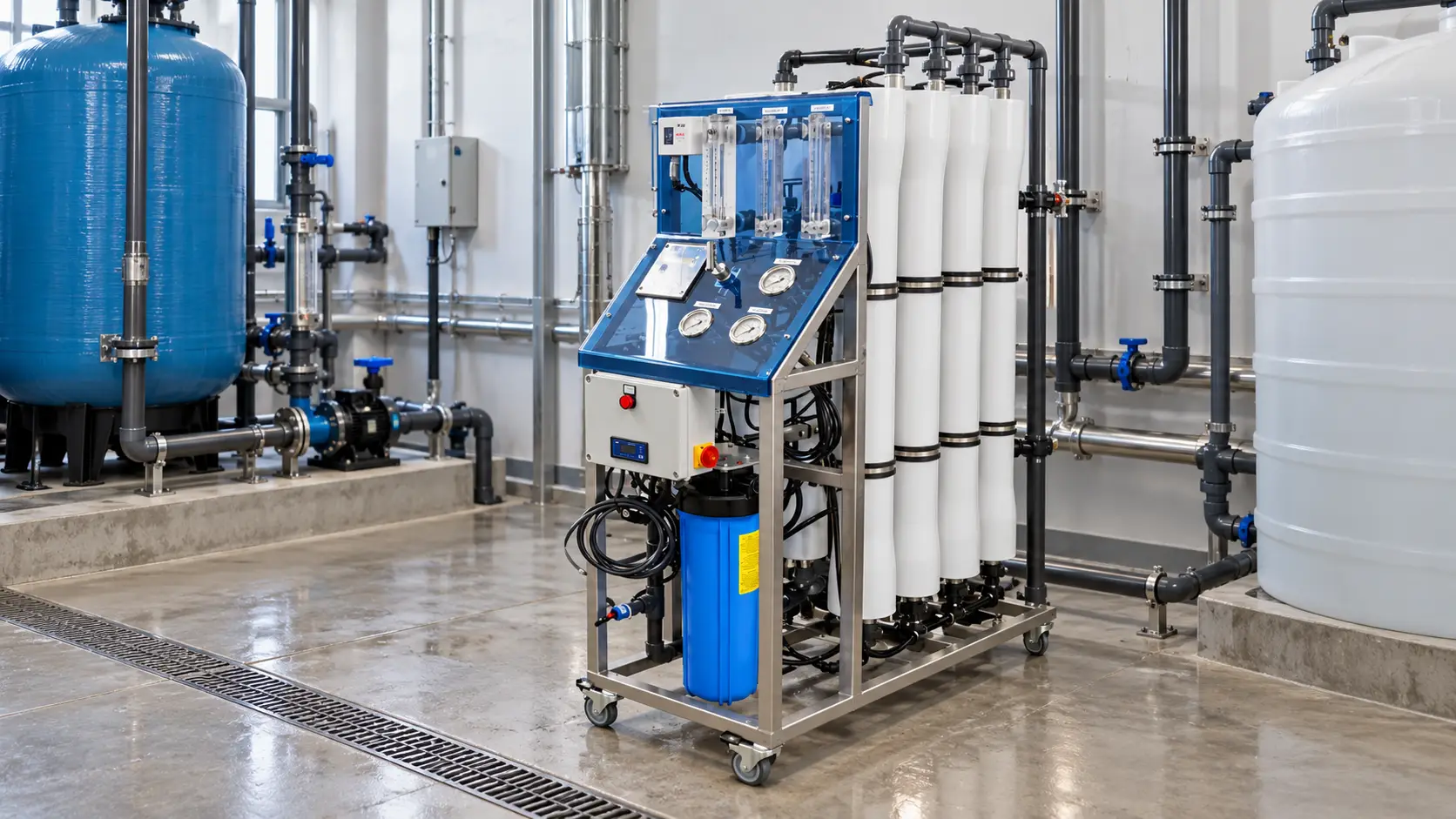
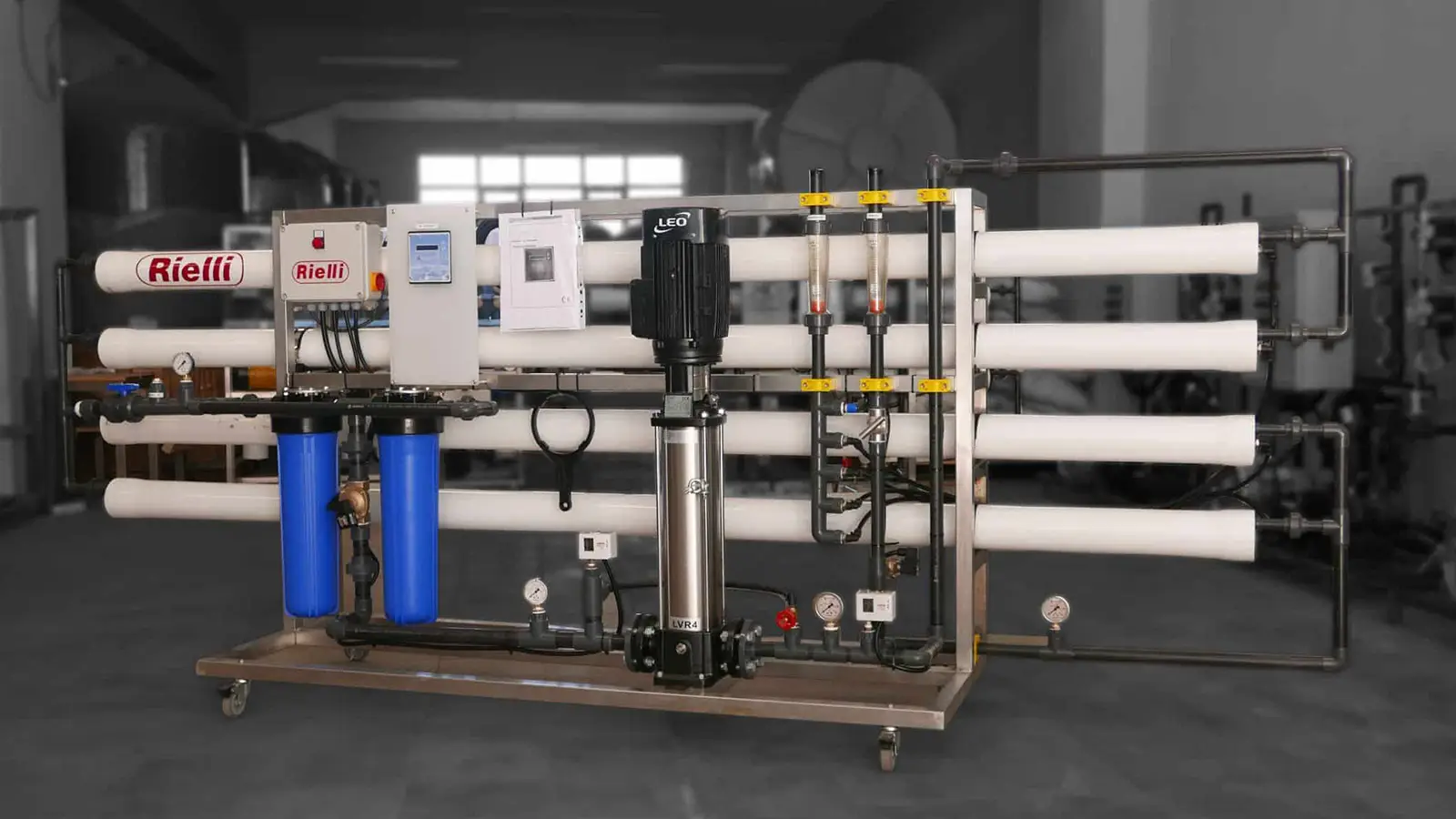
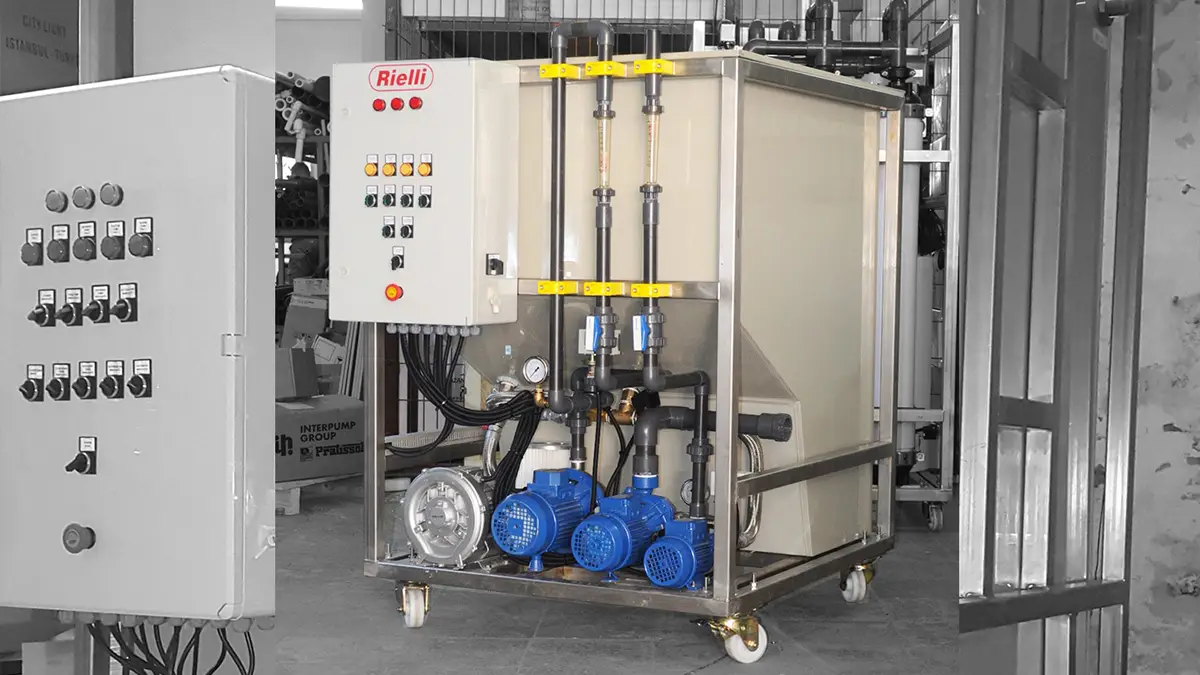
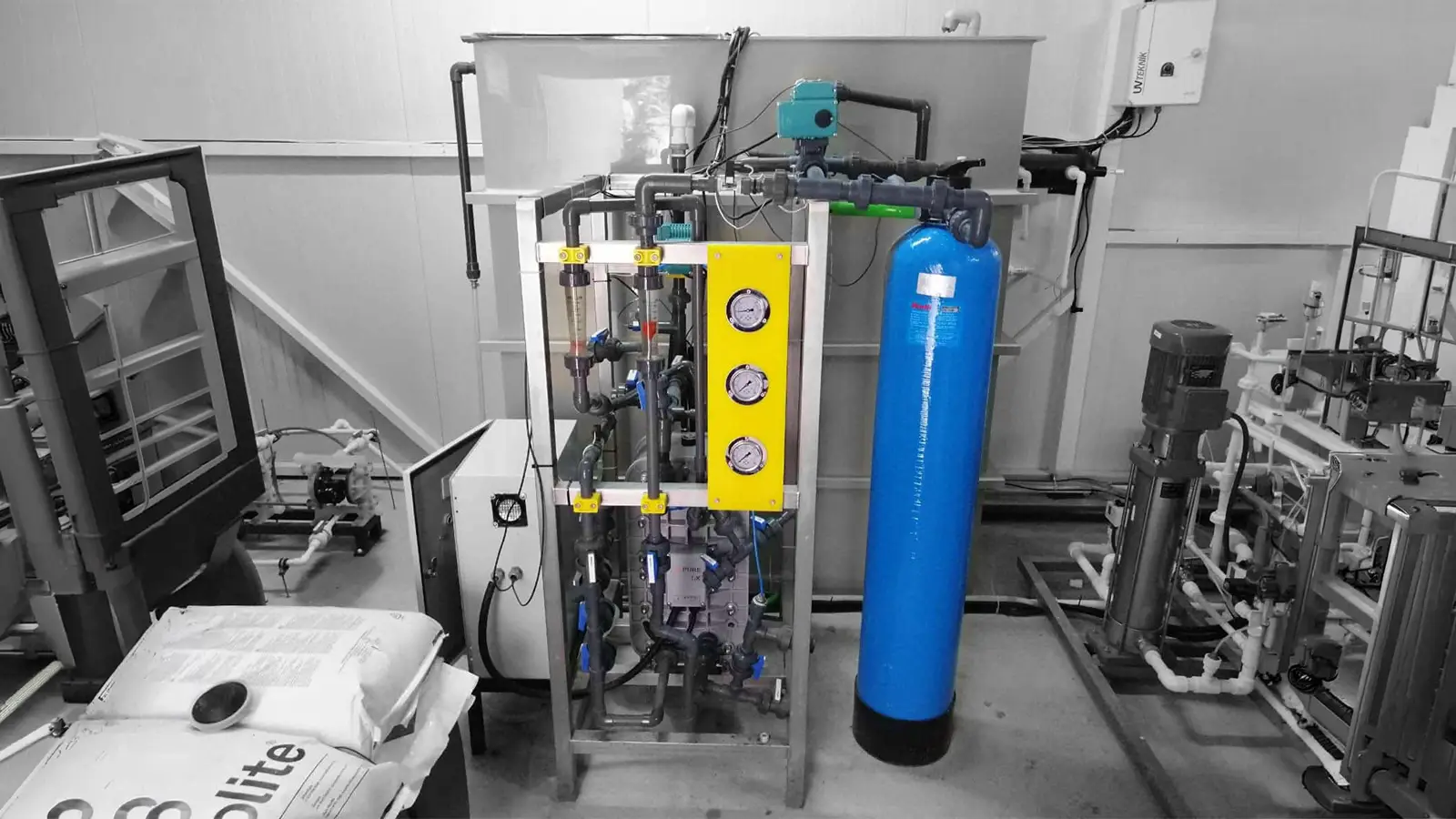
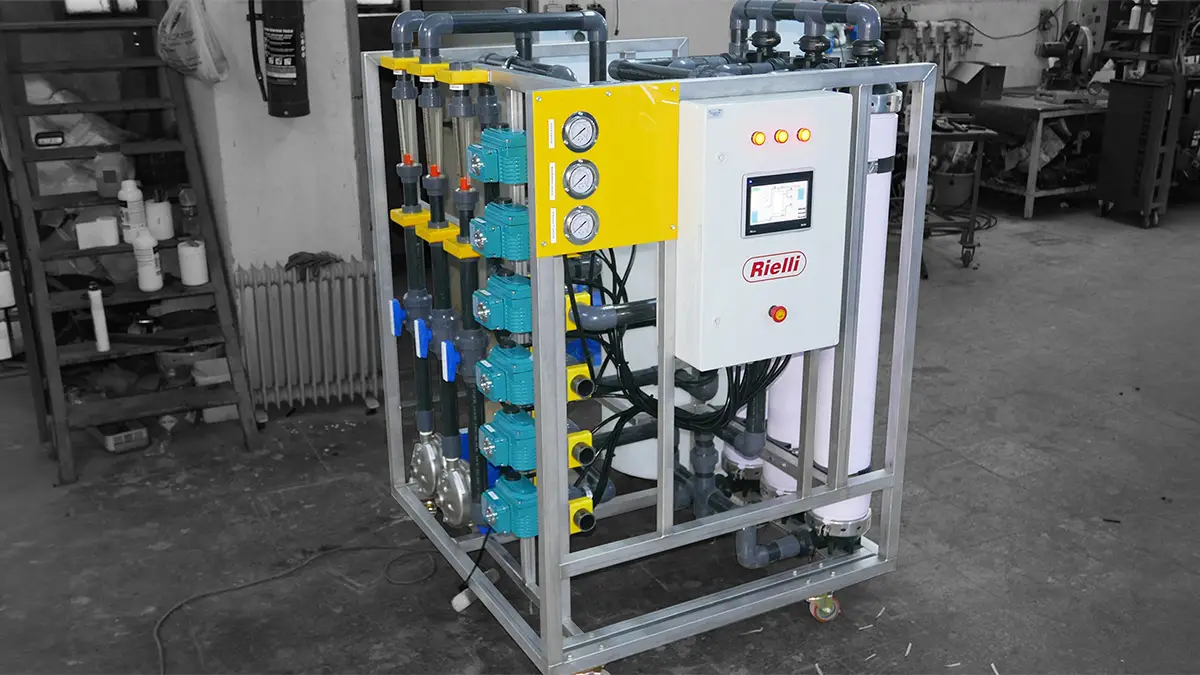
Rielli water softening and demineralization systems are designed to reduce water hardness and dissolved ion concentrations to levels appropriate for the intended application.
Suitable treatment processes are selected by evaluating each facility’s water analysis results, required treatment capacity, and target product water quality.
What Is a Water Softening System?
A water softening system removes calcium and magnesium ions responsible for water hardness through ion exchange resin technology.
In commonly used sodium-cycle water softeners, calcium and magnesium ions are exchanged for sodium ions held on the resin.
This process helps reduce the risk of scale formation associated with water hardness.
However, softened water is not the same as demineralized water. While hardness is reduced, the softening process does not remove all dissolved salts from the water.
How Does a Water Softening System Work?
As water passes through the ion exchange resin bed, calcium and magnesium ions are retained by the resin.
When the resin’s exchange capacity becomes depleted, a regeneration process is carried out using a salt solution, typically sodium chloride brine.
The system then undergoes appropriate rinsing stages before returning to normal service.
The frequency of regeneration and the amount of salt consumed depend on several factors, including feedwater hardness, water consumption, resin volume, and control settings.
For further information about the operating principle, explore the U.S. Environmental Protection Agency’s Cation Exchange Water Softeners resource.
What Is a Water Demineralization System?
Water demineralization is a treatment process designed to reduce dissolved mineral ions and produce water with a low ionic content.
In ion exchange demineralization systems, cation and anion exchange resins are used together to remove positively and negatively charged ions from water.
While water softening primarily targets calcium and magnesium hardness, demineralization provides more comprehensive dissolved ion removal.
The achievable treated water quality depends on feedwater characteristics and system design.
It is important to note that the term demineralized water does not automatically mean sterile water.
For applications requiring low conductivity, complementary or alternative technologies such as Industrial Reverse Osmosis (RO) Plants and EDI Electrodeionization Plants may also be considered.
Why Is Pretreatment Important?
Sediment, organic matter, and other substances present in raw water can affect the performance of downstream water treatment equipment.
Therefore, pretreatment requirements should be determined according to water analysis results.
- Multimedia Filters: Help remove suspended solids that contribute to water turbidity.
- Activated Carbon Filters: When appropriately designed, these filters can reduce chlorine, certain taste- and odor-causing compounds, and organic substances.
The selection of pretreatment equipment should be based on the feedwater requirements of the water softening or demineralization system.
Key Features of Rielli Water Softening and Demineralization Systems
Application-Specific Engineering
Rielli designs filtration and water softening systems using project-specific engineering calculations.
Equipment selection considers both initial investment costs and ongoing operating expenses to support an appropriate treatment configuration.
Automatic Operation and Compact Configurations
Automatic control systems manage backwashing and resin regeneration processes according to programmed operating conditions.
Cabinet-type water softening units can also be considered for applications requiring a compact equipment layout.
Water and Salt Consumption Management
Depending on the selected configuration, options for reducing salt consumption and recovering filter backwash water may be evaluated.
The characteristics of each waste stream must be assessed separately, as filter backwash water and saline resin regeneration wastewater have different compositions and treatment requirements.
Quality Control and Equipment Compatibility
Rielli filtration and water softening equipment undergo quality inspections, integration checks, and functional testing during production.
Direct procurement from equipment manufacturers also supports technical compatibility and cost management.
Define the Right Water Quality for Your Industrial Process
Water quality requirements vary depending on the production stage and application in industries such as textile manufacturing, chemical production, paper manufacturing, and paint production.
For some industrial processes, removing water hardness may be sufficient. Other applications require a more extensive reduction in dissolved mineral ions.
Therefore, system selection should not be based solely on hourly water flow requirements.
Target hardness, conductivity, and other process-specific water quality limits must also be established.
For more information about industry-specific applications, explore Rielli’s Industrial Process Water Production Solutions page.
Request a Quote for a Water Softening or Demineralization System
Evaluate your facility’s water quality requirements with Rielli’s engineering team.
To support the initial technical assessment and system selection process, you can provide the following information:
- Water source and recent water analysis results.
- Required hourly and daily water capacity.
- Target treated water hardness and conductivity.
- Intended application and daily operating hours.
- Existing water treatment infrastructure and available installation space.
- Continuous water supply and redundancy requirements.
These details help determine suitable treatment capacities, equipment configurations, and operational requirements for your project.
Request a Quote for a Water Softening and Demineralization System →