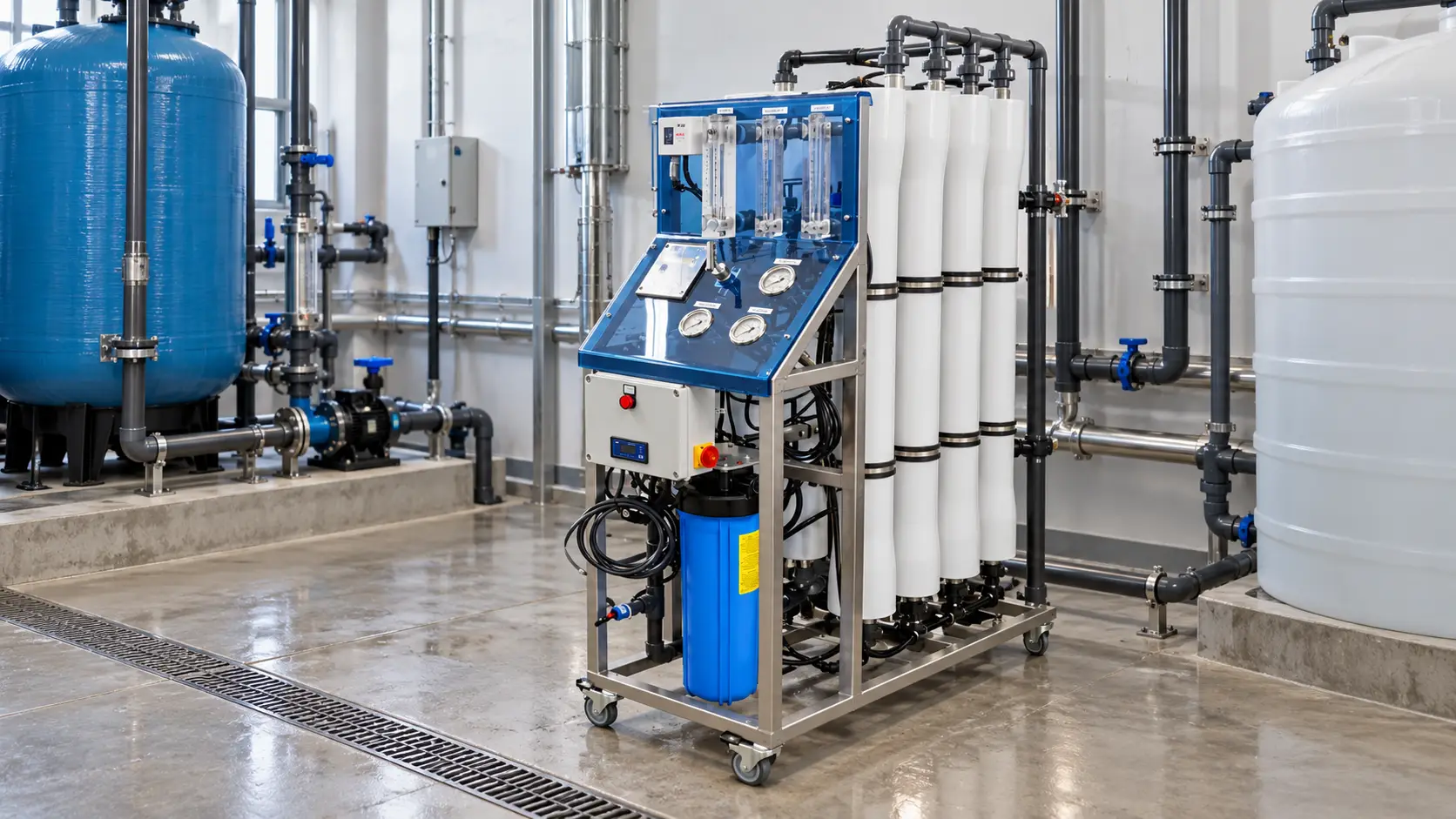
The primary objective of an agricultural water treatment project is to prepare water that meets the specific requirements of the crop and cultivation method. Open-field irrigation, seedling production, and soilless farming do not share the same water quality requirements. Rielli’s reverse osmosis and filtration technologies offer different treatment options that can be evaluated according to water analysis results and agricultural production plans.
In hydroponic and soilless cultivation systems, the mineral composition of the source water must be considered when preparing nutrient solutions. Rather than basing treatment decisions solely on water appearance or a single measurement, it is essential to evaluate source water characteristics, crop requirements, and fertilization strategies together.
Evaluate Salinity, Alkalinity and Irrigation Infrastructure Together
The Food and Agriculture Organization’s Water Quality for Agriculture Guidelines explain the relationship between salts in irrigation water, soil conditions, and plant growth.
For greenhouse operations, evaluating electrical conductivity (EC), pH, alkalinity, and individual ion concentrations helps determine the appropriate water treatment requirements. Acceptable water quality limits should be established according to the cultivated crop and specific growing conditions.
Suspended particles and organic residues can also affect the performance of irrigation equipment. Therefore, filtration requirements should be evaluated alongside the technical specifications of drip irrigation emitters, sprinklers, and other water distribution systems.
Dissolved salt removal and particle filtration serve different treatment objectives. A single filtration stage should not automatically be assumed capable of addressing both requirements.
Rielli Water Treatment Systems for Agriculture and Greenhouse Operations
Rielli offers a range of water treatment technologies for agricultural irrigation, greenhouse cultivation, and hydroponic farming, supporting source water preparation and filtration according to specific production requirements.
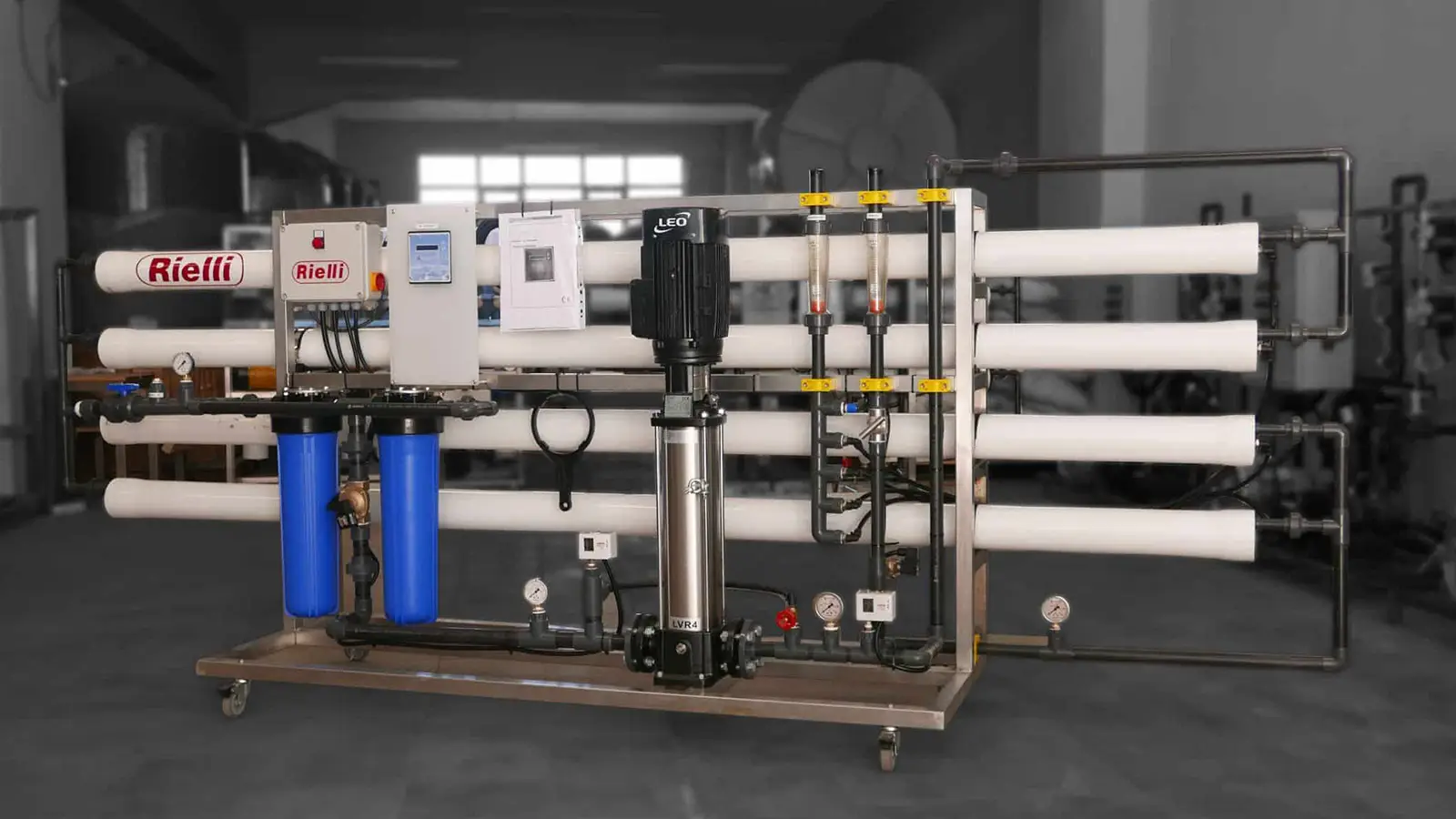
Industrial Reverse Osmosis (RO) Plants can be evaluated for agricultural applications requiring a reduction in the dissolved salt content of source water. Treated water quality should be planned together with the crop’s fertilization program and, where appropriate, controlled blending with other water sources. Producing water with the lowest possible mineral concentration is not necessarily the most suitable approach for every crop.
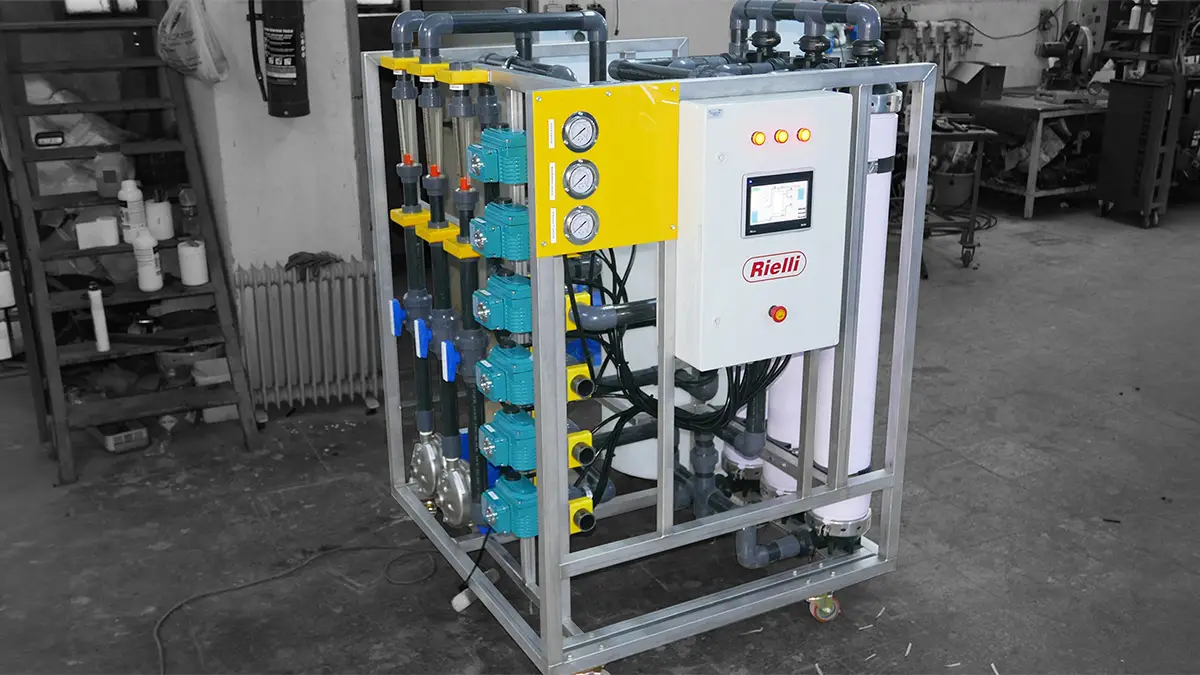
Blue Line Reverse Osmosis Systems may be considered for smaller-scale water preparation applications where the required treatment capacity and feedwater characteristics are suitable. In addition to greenhouse area, daily irrigation schedules and the available time for water production should be considered when selecting the appropriate system.
Ultrafiltration (UF) Units and Modules can be integrated into treatment stages requiring suspended solids and turbidity reduction. Where recirculated irrigation water contains potential plant pathogens or chemical residues, additional risk assessments and treatment requirements must be considered.
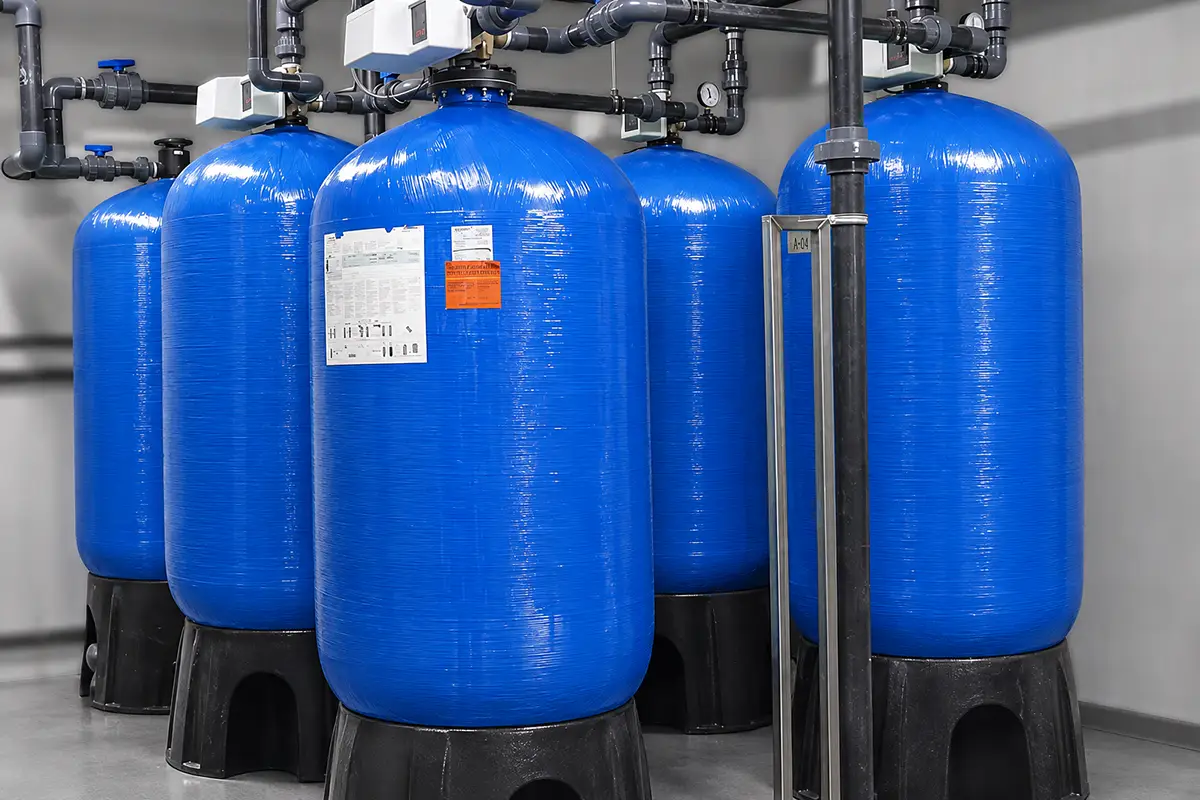
Water Softening and Demineralization Systems should be evaluated for auxiliary operations or specific water preparation requirements. Sodium-cycle water softening, in particular, should not be recommended unconditionally for crop irrigation. Sodium balance, crop sensitivity, and the intended application must be assessed before selecting this treatment approach.
Coordinate Water Treatment and Fertilization Strategies
An effective greenhouse water treatment or hydroponic irrigation project requires a comprehensive understanding of the water source, cultivated crops, production method, daily water consumption, and available water analysis results.
If a facility uses multiple water sources, such as well water, harvested rainwater, and recirculated drainage water, each source should be identified and evaluated separately.
The UMass Extension Guidelines on Water Quality for Greenhouse Crops explain the importance of alkalinity, pH, dissolved salts, and filtration in greenhouse water management.
Preparing treated water for use in nutrient solutions should be coordinated with agricultural consultants and the facility’s fertilization program. Installing a water treatment system alone does not guarantee a specific increase in crop yield.
Concentrate management, filter backwashing, water storage, and daily operational monitoring should also be incorporated into the overall facility water balance.
This approach allows treatment capacity to be evaluated based not only on the nominal flow rate of the equipment but also on the net volume of treated water available for actual irrigation use.
Prepare Irrigation Water According to Your Agricultural Production Goals